




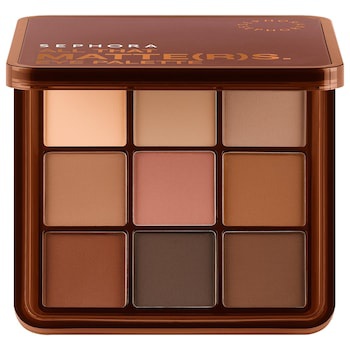
All That Matters Eye Palette
Ingredients overview
Highlights
Key Ingredients
Other Ingredients
Skim through
Sephora All That Matters Eye PaletteIngredients explained
Synthetic Fluorphlogopite is the synthetic version of the super commonly used mineral, Mica. The advantage of being synthetic is that it has a more consistent quality, fewer impurities and an even lower heavy metal content than Mica (not that Mica's heavy metal content is high). It is also more transparent and has improved light reflection.
The two main use cases for Synthetic Fluorphlogopite is being used neat as a superior "filler" or skin tone enhancer or it can also serve as a base for multi-layered, composite pigments such as pearl effect pigments where it is coated with one or more layers of metal oxide, most commonly titanium dioxide.
Ci 77891 is the color code of titanium dioxide. It's a white pigment with great color consistency and dispersibility.
A white powdery thing that's the major component of glass and sand. In cosmetics, it’s often in products that are supposed to keep your skin matte as it has great oil-absorbing abilities. It’s also used as a helper ingredient to thicken up products or suspend insoluble particles.
 We don't have description for this ingredient yet.
Bismuth Oxychloride has been around since the 1950s and it was one of the first synthetic materials to give a pearl-like effect in cosmetic products. It is a white powder with a fabulous sheen and a nice skin feel and it is still very popular in decorative cosmetics.
It has one major drawback: it is sensitive to light. Upon prolonged UV exposure, it can lose its sheen and become gray.
Probably the most common silicone of all. It is a polymer (created from repeating subunits) molecule and has different molecular weight and thus different viscosity versions from water-light to thick liquid.
As for skincare, it makes the skin silky smooth, creates a subtle gloss and forms a protective barrier (aka occlusive). Also, works well to fill in fine lines and wrinkles and give skin a plump look (of course that is only temporary, but still, it's nice). There are also scar treatment gels out there using dimethicone as their base ingredient. It helps to soften scars and increase their elasticity.
As for hair care, it is a non-volatile silicone meaning that it stays on the hair rather than evaporates from it and smoothes the hair like no other thing. Depending on your hair type, it can be a bit difficult to wash out and might cause some build-up (btw, this is not true to all silicones, only the non-volatile types).
A bit of a sloppy ingredient name as it covers not one but three pigments: red, yellow and black iron oxide.
The trio is invaluable for "skin-colored" makeup products (think your foundation and pressed powder) as blending these three shades carefully can produce almost any shade of natural-looking flesh tones.
An emollient ester with a rich and creamy but non-greasy skin feel. It makes skin supple and protects dry skin.
We don't have description for this ingredient yet.
A clear, light yellow liquid that is used to coat pigments (such as inorganic sunscreen agents or colorants) in cosmetic products. The coating helps to stabilize pigments in the formulas and also helps them to spread easily and evenly on the skin.
A bit of a sloppy ingredient name as it covers not one but three pigments: red, yellow and black iron oxide.
The trio is invaluable for "skin-colored" makeup products (think your foundation and pressed powder) as blending these three shades carefully can produce almost any shade of natural-looking flesh tones.
It’s pretty much the current IT-preservative. It’s safe and gentle, but even more importantly, it’s not a feared-by-everyone-mostly-without-scientific-reason paraben.
It’s not something new: it was introduced around 1950 and today it can be used up to 1% worldwide. It can be found in nature - in green tea - but the version used in cosmetics is synthetic.
Other than having a good safety profile and being quite gentle to the skin it has some other advantages too. It can be used in many types of formulations as it has great thermal stability (can be heated up to 85°C) and works on a wide range of pH levels (ph 3-10).
It’s often used together with ethylhexylglycerin as it nicely improves the preservative activity of phenoxyethanol.
A thick, high molecular weight silicone that is usually diluted in another, lighter silicone fluid (like dimethicone or cyclopentasiloxane). The dimethiconol containing silicone blends leave a silky smooth, non-greasy film on the skin.
It’s a handy multi-tasking ingredient that gives the skin a nice, soft feel. At the same time, it also boosts the effectiveness of other preservatives, such as the nowadays super commonly used phenoxyethanol.
The blend of these two (caprylyl glycol + phenoxyethanol) is called Optiphen, which not only helps to keep your cosmetics free from nasty things for a long time but also gives a good feel to the finished product. It's a popular duo.
It’s the most commonly used version of pure vitamin E in cosmetics. You can read all about the pure form here. This one is the so-called esterified version.
According to famous dermatologist, Leslie Baumann while tocopheryl acetate is more stable and has a longer shelf life, it’s also more poorly absorbed by the skin and may not have the same awesome photoprotective effects as pure Vit E.
If you have spotted ethylhexylglycerin on the ingredient list, most probably you will see there also the current IT-preservative, phenoxyethanol. They are good friends because ethylhexylglycerin can boost the effectiveness of phenoxyethanol (and other preservatives) and as an added bonus it feels nice on the skin too.
Also, it's an effective deodorant and a medium spreading emollient.
A spherical texturizing powder that's used as a texture enhancer and soft focus agent. It's claimed to give silicone type softness to the formula and also works as a (temporary) wrinkle filler.
A bit of a sloppy ingredient name as it covers not one but three pigments: red, yellow and black iron oxide.
The trio is invaluable for "skin-colored" makeup products (think your foundation and pressed powder) as blending these three shades carefully can produce almost any shade of natural-looking flesh tones.
Synthetic Fluorphlogopite is the synthetic version of the super commonly used mineral, Mica. The advantage of being synthetic is that it has a more consistent quality, fewer impurities and an even lower heavy metal content than Mica (not that Mica's heavy metal content is high). It is also more transparent and has improved light reflection.
The two main use cases for Synthetic Fluorphlogopite is being used neat as a superior "filler" or skin tone enhancer or it can also serve as a base for multi-layered, composite pigments such as pearl effect pigments where it is coated with one or more layers of metal oxide, most commonly titanium dioxide.
We don't have description for this ingredient yet.
A white powdery thing that's the major component of glass and sand. In cosmetics, it’s often in products that are supposed to keep your skin matte as it has great oil-absorbing abilities. It’s also used as a helper ingredient to thicken up products or suspend insoluble particles.
We don't have description for this ingredient yet.
A spherical texturizing powder that's used as a texture enhancer and soft focus agent. It's claimed to give silicone type softness to the formula and also works as a (temporary) wrinkle filler.
Bismuth Oxychloride has been around since the 1950s and it was one of the first synthetic materials to give a pearl-like effect in cosmetic products. It is a white powder with a fabulous sheen and a nice skin feel and it is still very popular in decorative cosmetics.
It has one major drawback: it is sensitive to light. Upon prolonged UV exposure, it can lose its sheen and become gray.
Ci 77891 is the color code of titanium dioxide. It's a white pigment with great color consistency and dispersibility.
A bit of a sloppy ingredient name as it covers not one but three pigments: red, yellow and black iron oxide.
The trio is invaluable for "skin-colored" makeup products (think your foundation and pressed powder) as blending these three shades carefully can produce almost any shade of natural-looking flesh tones.
Probably the most common silicone of all. It is a polymer (created from repeating subunits) molecule and has different molecular weight and thus different viscosity versions from water-light to thick liquid.
As for skincare, it makes the skin silky smooth, creates a subtle gloss and forms a protective barrier (aka occlusive). Also, works well to fill in fine lines and wrinkles and give skin a plump look (of course that is only temporary, but still, it's nice). There are also scar treatment gels out there using dimethicone as their base ingredient. It helps to soften scars and increase their elasticity.
As for hair care, it is a non-volatile silicone meaning that it stays on the hair rather than evaporates from it and smoothes the hair like no other thing. Depending on your hair type, it can be a bit difficult to wash out and might cause some build-up (btw, this is not true to all silicones, only the non-volatile types).
A bit of a sloppy ingredient name as it covers not one but three pigments: red, yellow and black iron oxide.
The trio is invaluable for "skin-colored" makeup products (think your foundation and pressed powder) as blending these three shades carefully can produce almost any shade of natural-looking flesh tones.
An emollient ester with a rich and creamy but non-greasy skin feel. It makes skin supple and protects dry skin.
We don't have description for this ingredient yet.
A clear, light yellow liquid that is used to coat pigments (such as inorganic sunscreen agents or colorants) in cosmetic products. The coating helps to stabilize pigments in the formulas and also helps them to spread easily and evenly on the skin.
A bit of a sloppy ingredient name as it covers not one but three pigments: red, yellow and black iron oxide.
The trio is invaluable for "skin-colored" makeup products (think your foundation and pressed powder) as blending these three shades carefully can produce almost any shade of natural-looking flesh tones.
It’s pretty much the current IT-preservative. It’s safe and gentle, but even more importantly, it’s not a feared-by-everyone-mostly-without-scientific-reason paraben.
It’s not something new: it was introduced around 1950 and today it can be used up to 1% worldwide. It can be found in nature - in green tea - but the version used in cosmetics is synthetic.
Other than having a good safety profile and being quite gentle to the skin it has some other advantages too. It can be used in many types of formulations as it has great thermal stability (can be heated up to 85°C) and works on a wide range of pH levels (ph 3-10).
It’s often used together with ethylhexylglycerin as it nicely improves the preservative activity of phenoxyethanol.
A thick, high molecular weight silicone that is usually diluted in another, lighter silicone fluid (like dimethicone or cyclopentasiloxane). The dimethiconol containing silicone blends leave a silky smooth, non-greasy film on the skin.
It’s a handy multi-tasking ingredient that gives the skin a nice, soft feel. At the same time, it also boosts the effectiveness of other preservatives, such as the nowadays super commonly used phenoxyethanol.
The blend of these two (caprylyl glycol + phenoxyethanol) is called Optiphen, which not only helps to keep your cosmetics free from nasty things for a long time but also gives a good feel to the finished product. It's a popular duo.
It’s the most commonly used version of pure vitamin E in cosmetics. You can read all about the pure form here. This one is the so-called esterified version.
According to famous dermatologist, Leslie Baumann while tocopheryl acetate is more stable and has a longer shelf life, it’s also more poorly absorbed by the skin and may not have the same awesome photoprotective effects as pure Vit E.
If you have spotted ethylhexylglycerin on the ingredient list, most probably you will see there also the current IT-preservative, phenoxyethanol. They are good friends because ethylhexylglycerin can boost the effectiveness of phenoxyethanol (and other preservatives) and as an added bonus it feels nice on the skin too.
Also, it's an effective deodorant and a medium spreading emollient.
Synthetic Fluorphlogopite is the synthetic version of the super commonly used mineral, Mica. The advantage of being synthetic is that it has a more consistent quality, fewer impurities and an even lower heavy metal content than Mica (not that Mica's heavy metal content is high). It is also more transparent and has improved light reflection.
The two main use cases for Synthetic Fluorphlogopite is being used neat as a superior "filler" or skin tone enhancer or it can also serve as a base for multi-layered, composite pigments such as pearl effect pigments where it is coated with one or more layers of metal oxide, most commonly titanium dioxide.
A white powdery thing that's the major component of glass and sand. In cosmetics, it’s often in products that are supposed to keep your skin matte as it has great oil-absorbing abilities. It’s also used as a helper ingredient to thicken up products or suspend insoluble particles.
We don't have description for this ingredient yet.
We don't have description for this ingredient yet.
A spherical texturizing powder that's used as a texture enhancer and soft focus agent. It's claimed to give silicone type softness to the formula and also works as a (temporary) wrinkle filler.
Bismuth Oxychloride has been around since the 1950s and it was one of the first synthetic materials to give a pearl-like effect in cosmetic products. It is a white powder with a fabulous sheen and a nice skin feel and it is still very popular in decorative cosmetics.
It has one major drawback: it is sensitive to light. Upon prolonged UV exposure, it can lose its sheen and become gray.
A bit of a sloppy ingredient name as it covers not one but three pigments: red, yellow and black iron oxide.
The trio is invaluable for "skin-colored" makeup products (think your foundation and pressed powder) as blending these three shades carefully can produce almost any shade of natural-looking flesh tones.
Probably the most common silicone of all. It is a polymer (created from repeating subunits) molecule and has different molecular weight and thus different viscosity versions from water-light to thick liquid.
As for skincare, it makes the skin silky smooth, creates a subtle gloss and forms a protective barrier (aka occlusive). Also, works well to fill in fine lines and wrinkles and give skin a plump look (of course that is only temporary, but still, it's nice). There are also scar treatment gels out there using dimethicone as their base ingredient. It helps to soften scars and increase their elasticity.
As for hair care, it is a non-volatile silicone meaning that it stays on the hair rather than evaporates from it and smoothes the hair like no other thing. Depending on your hair type, it can be a bit difficult to wash out and might cause some build-up (btw, this is not true to all silicones, only the non-volatile types).
A bit of a sloppy ingredient name as it covers not one but three pigments: red, yellow and black iron oxide.
The trio is invaluable for "skin-colored" makeup products (think your foundation and pressed powder) as blending these three shades carefully can produce almost any shade of natural-looking flesh tones.
A clear, light yellow liquid that is used to coat pigments (such as inorganic sunscreen agents or colorants) in cosmetic products. The coating helps to stabilize pigments in the formulas and also helps them to spread easily and evenly on the skin.
An emollient ester with a rich and creamy but non-greasy skin feel. It makes skin supple and protects dry skin.
We don't have description for this ingredient yet.
It’s pretty much the current IT-preservative. It’s safe and gentle, but even more importantly, it’s not a feared-by-everyone-mostly-without-scientific-reason paraben.
It’s not something new: it was introduced around 1950 and today it can be used up to 1% worldwide. It can be found in nature - in green tea - but the version used in cosmetics is synthetic.
Other than having a good safety profile and being quite gentle to the skin it has some other advantages too. It can be used in many types of formulations as it has great thermal stability (can be heated up to 85°C) and works on a wide range of pH levels (ph 3-10).
It’s often used together with ethylhexylglycerin as it nicely improves the preservative activity of phenoxyethanol.
A thick, high molecular weight silicone that is usually diluted in another, lighter silicone fluid (like dimethicone or cyclopentasiloxane). The dimethiconol containing silicone blends leave a silky smooth, non-greasy film on the skin.
It’s a handy multi-tasking ingredient that gives the skin a nice, soft feel. At the same time, it also boosts the effectiveness of other preservatives, such as the nowadays super commonly used phenoxyethanol.
The blend of these two (caprylyl glycol + phenoxyethanol) is called Optiphen, which not only helps to keep your cosmetics free from nasty things for a long time but also gives a good feel to the finished product. It's a popular duo.
It’s the most commonly used version of pure vitamin E in cosmetics. You can read all about the pure form here. This one is the so-called esterified version.
According to famous dermatologist, Leslie Baumann while tocopheryl acetate is more stable and has a longer shelf life, it’s also more poorly absorbed by the skin and may not have the same awesome photoprotective effects as pure Vit E.
If you have spotted ethylhexylglycerin on the ingredient list, most probably you will see there also the current IT-preservative, phenoxyethanol. They are good friends because ethylhexylglycerin can boost the effectiveness of phenoxyethanol (and other preservatives) and as an added bonus it feels nice on the skin too.
Also, it's an effective deodorant and a medium spreading emollient.
Synthetic Fluorphlogopite is the synthetic version of the super commonly used mineral, Mica. The advantage of being synthetic is that it has a more consistent quality, fewer impurities and an even lower heavy metal content than Mica (not that Mica's heavy metal content is high). It is also more transparent and has improved light reflection.
The two main use cases for Synthetic Fluorphlogopite is being used neat as a superior "filler" or skin tone enhancer or it can also serve as a base for multi-layered, composite pigments such as pearl effect pigments where it is coated with one or more layers of metal oxide, most commonly titanium dioxide.
A bit of a sloppy ingredient name as it covers not one but three pigments: red, yellow and black iron oxide.
The trio is invaluable for "skin-colored" makeup products (think your foundation and pressed powder) as blending these three shades carefully can produce almost any shade of natural-looking flesh tones.
A white powdery thing that's the major component of glass and sand. In cosmetics, it’s often in products that are supposed to keep your skin matte as it has great oil-absorbing abilities. It’s also used as a helper ingredient to thicken up products or suspend insoluble particles.
We don't have description for this ingredient yet.
We don't have description for this ingredient yet.
A bit of a sloppy ingredient name as it covers not one but three pigments: red, yellow and black iron oxide.
The trio is invaluable for "skin-colored" makeup products (think your foundation and pressed powder) as blending these three shades carefully can produce almost any shade of natural-looking flesh tones.
A spherical texturizing powder that's used as a texture enhancer and soft focus agent. It's claimed to give silicone type softness to the formula and also works as a (temporary) wrinkle filler.
Bismuth Oxychloride has been around since the 1950s and it was one of the first synthetic materials to give a pearl-like effect in cosmetic products. It is a white powder with a fabulous sheen and a nice skin feel and it is still very popular in decorative cosmetics.
It has one major drawback: it is sensitive to light. Upon prolonged UV exposure, it can lose its sheen and become gray.
A bit of a sloppy ingredient name as it covers not one but three pigments: red, yellow and black iron oxide.
The trio is invaluable for "skin-colored" makeup products (think your foundation and pressed powder) as blending these three shades carefully can produce almost any shade of natural-looking flesh tones.
Probably the most common silicone of all. It is a polymer (created from repeating subunits) molecule and has different molecular weight and thus different viscosity versions from water-light to thick liquid.
As for skincare, it makes the skin silky smooth, creates a subtle gloss and forms a protective barrier (aka occlusive). Also, works well to fill in fine lines and wrinkles and give skin a plump look (of course that is only temporary, but still, it's nice). There are also scar treatment gels out there using dimethicone as their base ingredient. It helps to soften scars and increase their elasticity.
As for hair care, it is a non-volatile silicone meaning that it stays on the hair rather than evaporates from it and smoothes the hair like no other thing. Depending on your hair type, it can be a bit difficult to wash out and might cause some build-up (btw, this is not true to all silicones, only the non-volatile types).
An emollient ester with a rich and creamy but non-greasy skin feel. It makes skin supple and protects dry skin.
We don't have description for this ingredient yet.
Ci 19140 or Tartrazine is a super common colorant in skincare, makeup, medicine & food. It’s a synthetic lemon yellow that's used alone or mixed with other colors for special shades.
FDA says it's possible, but rare, to have an allergic-type reaction to a color additive. As an example, it mentions that Ci 19140 may cause itching and hives in some people but the colorant is always labeled so that you can avoid it if you are sensitive.
A clear, light yellow liquid that is used to coat pigments (such as inorganic sunscreen agents or colorants) in cosmetic products. The coating helps to stabilize pigments in the formulas and also helps them to spread easily and evenly on the skin.
It’s pretty much the current IT-preservative. It’s safe and gentle, but even more importantly, it’s not a feared-by-everyone-mostly-without-scientific-reason paraben.
It’s not something new: it was introduced around 1950 and today it can be used up to 1% worldwide. It can be found in nature - in green tea - but the version used in cosmetics is synthetic.
Other than having a good safety profile and being quite gentle to the skin it has some other advantages too. It can be used in many types of formulations as it has great thermal stability (can be heated up to 85°C) and works on a wide range of pH levels (ph 3-10).
It’s often used together with ethylhexylglycerin as it nicely improves the preservative activity of phenoxyethanol.
A thick, high molecular weight silicone that is usually diluted in another, lighter silicone fluid (like dimethicone or cyclopentasiloxane). The dimethiconol containing silicone blends leave a silky smooth, non-greasy film on the skin.
It’s a handy multi-tasking ingredient that gives the skin a nice, soft feel. At the same time, it also boosts the effectiveness of other preservatives, such as the nowadays super commonly used phenoxyethanol.
The blend of these two (caprylyl glycol + phenoxyethanol) is called Optiphen, which not only helps to keep your cosmetics free from nasty things for a long time but also gives a good feel to the finished product. It's a popular duo.
It’s the most commonly used version of pure vitamin E in cosmetics. You can read all about the pure form here. This one is the so-called esterified version.
According to famous dermatologist, Leslie Baumann while tocopheryl acetate is more stable and has a longer shelf life, it’s also more poorly absorbed by the skin and may not have the same awesome photoprotective effects as pure Vit E.
If you have spotted ethylhexylglycerin on the ingredient list, most probably you will see there also the current IT-preservative, phenoxyethanol. They are good friends because ethylhexylglycerin can boost the effectiveness of phenoxyethanol (and other preservatives) and as an added bonus it feels nice on the skin too.
Also, it's an effective deodorant and a medium spreading emollient.
A bit of a sloppy ingredient name as it covers not one but three pigments: red, yellow and black iron oxide.
The trio is invaluable for "skin-colored" makeup products (think your foundation and pressed powder) as blending these three shades carefully can produce almost any shade of natural-looking flesh tones.
Synthetic Fluorphlogopite is the synthetic version of the super commonly used mineral, Mica. The advantage of being synthetic is that it has a more consistent quality, fewer impurities and an even lower heavy metal content than Mica (not that Mica's heavy metal content is high). It is also more transparent and has improved light reflection.
The two main use cases for Synthetic Fluorphlogopite is being used neat as a superior "filler" or skin tone enhancer or it can also serve as a base for multi-layered, composite pigments such as pearl effect pigments where it is coated with one or more layers of metal oxide, most commonly titanium dioxide.
A bit of a sloppy ingredient name as it covers not one but three pigments: red, yellow and black iron oxide.
The trio is invaluable for "skin-colored" makeup products (think your foundation and pressed powder) as blending these three shades carefully can produce almost any shade of natural-looking flesh tones.
A white powdery thing that's the major component of glass and sand. In cosmetics, it’s often in products that are supposed to keep your skin matte as it has great oil-absorbing abilities. It’s also used as a helper ingredient to thicken up products or suspend insoluble particles.
We don't have description for this ingredient yet.
An inorganic (as in no carbon in its molecule) pigment that gives purple or violet shade.
A bit of a sloppy ingredient name as it covers not one but three pigments: red, yellow and black iron oxide.
The trio is invaluable for "skin-colored" makeup products (think your foundation and pressed powder) as blending these three shades carefully can produce almost any shade of natural-looking flesh tones.
A spherical texturizing powder that's used as a texture enhancer and soft focus agent. It's claimed to give silicone type softness to the formula and also works as a (temporary) wrinkle filler.
Probably the most common silicone of all. It is a polymer (created from repeating subunits) molecule and has different molecular weight and thus different viscosity versions from water-light to thick liquid.
As for skincare, it makes the skin silky smooth, creates a subtle gloss and forms a protective barrier (aka occlusive). Also, works well to fill in fine lines and wrinkles and give skin a plump look (of course that is only temporary, but still, it's nice). There are also scar treatment gels out there using dimethicone as their base ingredient. It helps to soften scars and increase their elasticity.
As for hair care, it is a non-volatile silicone meaning that it stays on the hair rather than evaporates from it and smoothes the hair like no other thing. Depending on your hair type, it can be a bit difficult to wash out and might cause some build-up (btw, this is not true to all silicones, only the non-volatile types).
We don't have description for this ingredient yet.
A solid silicone resin that creates a permeable film over the skin. It makes makeup formulas more long-lasting and can enhance the water resistance of sunscreens. It leaves a non-tacky film when dried.
A super common emollient that makes your skin feel nice and smooth. It comes from coconut oil and glycerin, it’s light-textured, clear, odorless and non-greasy. It’s a nice ingredient that just feels good on the skin, is super well tolerated by every skin type and easy to formulate with. No wonder it’s popular.
It’s pretty much the current IT-preservative. It’s safe and gentle, but even more importantly, it’s not a feared-by-everyone-mostly-without-scientific-reason paraben.
It’s not something new: it was introduced around 1950 and today it can be used up to 1% worldwide. It can be found in nature - in green tea - but the version used in cosmetics is synthetic.
Other than having a good safety profile and being quite gentle to the skin it has some other advantages too. It can be used in many types of formulations as it has great thermal stability (can be heated up to 85°C) and works on a wide range of pH levels (ph 3-10).
It’s often used together with ethylhexylglycerin as it nicely improves the preservative activity of phenoxyethanol.
It’s a handy multi-tasking ingredient that gives the skin a nice, soft feel. At the same time, it also boosts the effectiveness of other preservatives, such as the nowadays super commonly used phenoxyethanol.
The blend of these two (caprylyl glycol + phenoxyethanol) is called Optiphen, which not only helps to keep your cosmetics free from nasty things for a long time but also gives a good feel to the finished product. It's a popular duo.
It’s the most commonly used version of pure vitamin E in cosmetics. You can read all about the pure form here. This one is the so-called esterified version.
According to famous dermatologist, Leslie Baumann while tocopheryl acetate is more stable and has a longer shelf life, it’s also more poorly absorbed by the skin and may not have the same awesome photoprotective effects as pure Vit E.
Kaolin is a type of clay or to be precise, a naturally occurring hydrous aluminum silicate. When you hear clay, you probably think of a muddy greenish-black mess, but that one is bentonite, and this one is a fine, white powder. It is so white that it's also often used, in small amounts, as a helper ingredient to give opacity and whiteness to the cosmetic formulas.
As a clay, it's absorbent and can suck up excess sebum and gunk from your skin, but less so than the more aggressive bentonite. As it's less absorbent, it's also less drying and gentler on the skin, so it's ideal for dry and sensitive skin types.
If you have spotted ethylhexylglycerin on the ingredient list, most probably you will see there also the current IT-preservative, phenoxyethanol. They are good friends because ethylhexylglycerin can boost the effectiveness of phenoxyethanol (and other preservatives) and as an added bonus it feels nice on the skin too.
Also, it's an effective deodorant and a medium spreading emollient.
A bit of a sloppy ingredient name as it covers not one but three pigments: red, yellow and black iron oxide.
The trio is invaluable for "skin-colored" makeup products (think your foundation and pressed powder) as blending these three shades carefully can produce almost any shade of natural-looking flesh tones.
Synthetic Fluorphlogopite is the synthetic version of the super commonly used mineral, Mica. The advantage of being synthetic is that it has a more consistent quality, fewer impurities and an even lower heavy metal content than Mica (not that Mica's heavy metal content is high). It is also more transparent and has improved light reflection.
The two main use cases for Synthetic Fluorphlogopite is being used neat as a superior "filler" or skin tone enhancer or it can also serve as a base for multi-layered, composite pigments such as pearl effect pigments where it is coated with one or more layers of metal oxide, most commonly titanium dioxide.
A bit of a sloppy ingredient name as it covers not one but three pigments: red, yellow and black iron oxide.
The trio is invaluable for "skin-colored" makeup products (think your foundation and pressed powder) as blending these three shades carefully can produce almost any shade of natural-looking flesh tones.
A white powdery thing that's the major component of glass and sand. In cosmetics, it’s often in products that are supposed to keep your skin matte as it has great oil-absorbing abilities. It’s also used as a helper ingredient to thicken up products or suspend insoluble particles.
We don't have description for this ingredient yet.
A spherical texturizing powder that's used as a texture enhancer and soft focus agent. It's claimed to give silicone type softness to the formula and also works as a (temporary) wrinkle filler.
We don't have description for this ingredient yet.
Probably the most common silicone of all. It is a polymer (created from repeating subunits) molecule and has different molecular weight and thus different viscosity versions from water-light to thick liquid.
As for skincare, it makes the skin silky smooth, creates a subtle gloss and forms a protective barrier (aka occlusive). Also, works well to fill in fine lines and wrinkles and give skin a plump look (of course that is only temporary, but still, it's nice). There are also scar treatment gels out there using dimethicone as their base ingredient. It helps to soften scars and increase their elasticity.
As for hair care, it is a non-volatile silicone meaning that it stays on the hair rather than evaporates from it and smoothes the hair like no other thing. Depending on your hair type, it can be a bit difficult to wash out and might cause some build-up (btw, this is not true to all silicones, only the non-volatile types).
A solid silicone resin that creates a permeable film over the skin. It makes makeup formulas more long-lasting and can enhance the water resistance of sunscreens. It leaves a non-tacky film when dried.
We don't have description for this ingredient yet.
It’s pretty much the current IT-preservative. It’s safe and gentle, but even more importantly, it’s not a feared-by-everyone-mostly-without-scientific-reason paraben.
It’s not something new: it was introduced around 1950 and today it can be used up to 1% worldwide. It can be found in nature - in green tea - but the version used in cosmetics is synthetic.
Other than having a good safety profile and being quite gentle to the skin it has some other advantages too. It can be used in many types of formulations as it has great thermal stability (can be heated up to 85°C) and works on a wide range of pH levels (ph 3-10).
It’s often used together with ethylhexylglycerin as it nicely improves the preservative activity of phenoxyethanol.
A super common emollient that makes your skin feel nice and smooth. It comes from coconut oil and glycerin, it’s light-textured, clear, odorless and non-greasy. It’s a nice ingredient that just feels good on the skin, is super well tolerated by every skin type and easy to formulate with. No wonder it’s popular.
It’s a handy multi-tasking ingredient that gives the skin a nice, soft feel. At the same time, it also boosts the effectiveness of other preservatives, such as the nowadays super commonly used phenoxyethanol.
The blend of these two (caprylyl glycol + phenoxyethanol) is called Optiphen, which not only helps to keep your cosmetics free from nasty things for a long time but also gives a good feel to the finished product. It's a popular duo.
It’s the most commonly used version of pure vitamin E in cosmetics. You can read all about the pure form here. This one is the so-called esterified version.
According to famous dermatologist, Leslie Baumann while tocopheryl acetate is more stable and has a longer shelf life, it’s also more poorly absorbed by the skin and may not have the same awesome photoprotective effects as pure Vit E.
If you have spotted ethylhexylglycerin on the ingredient list, most probably you will see there also the current IT-preservative, phenoxyethanol. They are good friends because ethylhexylglycerin can boost the effectiveness of phenoxyethanol (and other preservatives) and as an added bonus it feels nice on the skin too.
Also, it's an effective deodorant and a medium spreading emollient.
Synthetic Fluorphlogopite is the synthetic version of the super commonly used mineral, Mica. The advantage of being synthetic is that it has a more consistent quality, fewer impurities and an even lower heavy metal content than Mica (not that Mica's heavy metal content is high). It is also more transparent and has improved light reflection.
The two main use cases for Synthetic Fluorphlogopite is being used neat as a superior "filler" or skin tone enhancer or it can also serve as a base for multi-layered, composite pigments such as pearl effect pigments where it is coated with one or more layers of metal oxide, most commonly titanium dioxide.
A white powdery thing that's the major component of glass and sand. In cosmetics, it’s often in products that are supposed to keep your skin matte as it has great oil-absorbing abilities. It’s also used as a helper ingredient to thicken up products or suspend insoluble particles.
We don't have description for this ingredient yet.
We don't have description for this ingredient yet.
Probably the most common silicone of all. It is a polymer (created from repeating subunits) molecule and has different molecular weight and thus different viscosity versions from water-light to thick liquid.
As for skincare, it makes the skin silky smooth, creates a subtle gloss and forms a protective barrier (aka occlusive). Also, works well to fill in fine lines and wrinkles and give skin a plump look (of course that is only temporary, but still, it's nice). There are also scar treatment gels out there using dimethicone as their base ingredient. It helps to soften scars and increase their elasticity.
As for hair care, it is a non-volatile silicone meaning that it stays on the hair rather than evaporates from it and smoothes the hair like no other thing. Depending on your hair type, it can be a bit difficult to wash out and might cause some build-up (btw, this is not true to all silicones, only the non-volatile types).
An emollient ester with a rich and creamy but non-greasy skin feel. It makes skin supple and protects dry skin.
We don't have description for this ingredient yet.
A clear, light yellow liquid that is used to coat pigments (such as inorganic sunscreen agents or colorants) in cosmetic products. The coating helps to stabilize pigments in the formulas and also helps them to spread easily and evenly on the skin.
It’s pretty much the current IT-preservative. It’s safe and gentle, but even more importantly, it’s not a feared-by-everyone-mostly-without-scientific-reason paraben.
It’s not something new: it was introduced around 1950 and today it can be used up to 1% worldwide. It can be found in nature - in green tea - but the version used in cosmetics is synthetic.
Other than having a good safety profile and being quite gentle to the skin it has some other advantages too. It can be used in many types of formulations as it has great thermal stability (can be heated up to 85°C) and works on a wide range of pH levels (ph 3-10).
It’s often used together with ethylhexylglycerin as it nicely improves the preservative activity of phenoxyethanol.
A thick, high molecular weight silicone that is usually diluted in another, lighter silicone fluid (like dimethicone or cyclopentasiloxane). The dimethiconol containing silicone blends leave a silky smooth, non-greasy film on the skin.
It’s a handy multi-tasking ingredient that gives the skin a nice, soft feel. At the same time, it also boosts the effectiveness of other preservatives, such as the nowadays super commonly used phenoxyethanol.
The blend of these two (caprylyl glycol + phenoxyethanol) is called Optiphen, which not only helps to keep your cosmetics free from nasty things for a long time but also gives a good feel to the finished product. It's a popular duo.
It’s the most commonly used version of pure vitamin E in cosmetics. You can read all about the pure form here. This one is the so-called esterified version.
According to famous dermatologist, Leslie Baumann while tocopheryl acetate is more stable and has a longer shelf life, it’s also more poorly absorbed by the skin and may not have the same awesome photoprotective effects as pure Vit E.
If you have spotted ethylhexylglycerin on the ingredient list, most probably you will see there also the current IT-preservative, phenoxyethanol. They are good friends because ethylhexylglycerin can boost the effectiveness of phenoxyethanol (and other preservatives) and as an added bonus it feels nice on the skin too.
Also, it's an effective deodorant and a medium spreading emollient.
Kaolin is a type of clay or to be precise, a naturally occurring hydrous aluminum silicate. When you hear clay, you probably think of a muddy greenish-black mess, but that one is bentonite, and this one is a fine, white powder. It is so white that it's also often used, in small amounts, as a helper ingredient to give opacity and whiteness to the cosmetic formulas.
As a clay, it's absorbent and can suck up excess sebum and gunk from your skin, but less so than the more aggressive bentonite. As it's less absorbent, it's also less drying and gentler on the skin, so it's ideal for dry and sensitive skin types.
An inorganic (as in no carbon in its molecule) pigment that can range in shade from blue (most common) to violet, pink or even green. It is not permitted in lip products in the US.
Bismuth Oxychloride has been around since the 1950s and it was one of the first synthetic materials to give a pearl-like effect in cosmetic products. It is a white powder with a fabulous sheen and a nice skin feel and it is still very popular in decorative cosmetics.
It has one major drawback: it is sensitive to light. Upon prolonged UV exposure, it can lose its sheen and become gray.
A bit of a sloppy ingredient name as it covers not one but three pigments: red, yellow and black iron oxide.
The trio is invaluable for "skin-colored" makeup products (think your foundation and pressed powder) as blending these three shades carefully can produce almost any shade of natural-looking flesh tones.
An inorganic (as in no carbon in its molecule) pigment that gives purple or violet shade.
Ci 77891 is the color code of titanium dioxide. It's a white pigment with great color consistency and dispersibility.
You may also want to take a look at...
| what‑it‑does | viscosity controlling |
| what‑it‑does | colorant |
| irritancy, com. | 0, 0 |
| what‑it‑does | viscosity controlling |
| what‑it‑does | viscosity controlling |
| what‑it‑does | emollient | viscosity controlling |
| what‑it‑does | colorant |
| what‑it‑does | emollient |
| irritancy, com. | 0, 1 |
| what‑it‑does | colorant |
| irritancy, com. | 0, 0 |
| what‑it‑does | emollient |
| what‑it‑does | emollient | viscosity controlling |
| irritancy, com. | 0, 0 |
| what‑it‑does | colorant |
| irritancy, com. | 0, 0 |
| what‑it‑does | preservative |
| what‑it‑does | emollient | moisturizer/humectant |
| what‑it‑does | moisturizer/humectant | emollient |
| what‑it‑does | antioxidant |
| irritancy, com. | 0, 0 |
| what‑it‑does | preservative |
| what‑it‑does | colorant |
| irritancy, com. | 0, 0 |
| what‑it‑does | viscosity controlling |
| what‑it‑does | viscosity controlling |
| what‑it‑does | viscosity controlling |
| what‑it‑does | emollient | viscosity controlling |
| what‑it‑does | colorant |
| what‑it‑does | colorant |
| irritancy, com. | 0, 0 |
| what‑it‑does | colorant |
| irritancy, com. | 0, 0 |
| what‑it‑does | emollient |
| irritancy, com. | 0, 1 |
| what‑it‑does | colorant |
| irritancy, com. | 0, 0 |
| what‑it‑does | emollient |
| what‑it‑does | emollient | viscosity controlling |
| irritancy, com. | 0, 0 |
| what‑it‑does | colorant |
| irritancy, com. | 0, 0 |
| what‑it‑does | preservative |
| what‑it‑does | emollient | moisturizer/humectant |
| what‑it‑does | moisturizer/humectant | emollient |
| what‑it‑does | antioxidant |
| irritancy, com. | 0, 0 |
| what‑it‑does | preservative |
| what‑it‑does | viscosity controlling |
| what‑it‑does | viscosity controlling |
| what‑it‑does | viscosity controlling |
| what‑it‑does | emollient | viscosity controlling |
| what‑it‑does | colorant |
| what‑it‑does | colorant |
| irritancy, com. | 0, 0 |
| what‑it‑does | emollient |
| irritancy, com. | 0, 1 |
| what‑it‑does | colorant |
| irritancy, com. | 0, 0 |
| what‑it‑does | colorant |
| irritancy, com. | 0, 0 |
| what‑it‑does | emollient |
| what‑it‑does | emollient | viscosity controlling |
| irritancy, com. | 0, 0 |
| what‑it‑does | preservative |
| what‑it‑does | emollient | moisturizer/humectant |
| what‑it‑does | moisturizer/humectant | emollient |
| what‑it‑does | antioxidant |
| irritancy, com. | 0, 0 |
| what‑it‑does | preservative |
| what‑it‑does | viscosity controlling |
| what‑it‑does | colorant |
| irritancy, com. | 0, 0 |
| what‑it‑does | viscosity controlling |
| what‑it‑does | viscosity controlling |
| what‑it‑does | emollient | viscosity controlling |
| what‑it‑does | colorant |
| irritancy, com. | 0, 0 |
| what‑it‑does | colorant |
| what‑it‑does | colorant |
| irritancy, com. | 0, 0 |
| what‑it‑does | emollient |
| irritancy, com. | 0, 1 |
| what‑it‑does | emollient |
| what‑it‑does | emollient | viscosity controlling |
| irritancy, com. | 0, 0 |
| what‑it‑does | colorant |
| what‑it‑does | preservative |
| what‑it‑does | emollient | moisturizer/humectant |
| what‑it‑does | moisturizer/humectant | emollient |
| what‑it‑does | antioxidant |
| irritancy, com. | 0, 0 |
| what‑it‑does | preservative |
| what‑it‑does | colorant |
| irritancy, com. | 0, 0 |
| what‑it‑does | viscosity controlling |
| what‑it‑does | colorant |
| irritancy, com. | 0, 0 |
| what‑it‑does | viscosity controlling |
| what‑it‑does | viscosity controlling |
| what‑it‑does | colorant |
| what‑it‑does | colorant |
| irritancy, com. | 0, 0 |
| what‑it‑does | emollient |
| irritancy, com. | 0, 1 |
| what‑it‑does | emollient | viscosity controlling |
| what‑it‑does | emollient |
| what‑it‑does | emollient |
| what‑it‑does | preservative |
| what‑it‑does | moisturizer/humectant | emollient |
| what‑it‑does | antioxidant |
| irritancy, com. | 0, 0 |
| what‑it‑does | colorant | abrasive/scrub |
| irritancy, com. | 0, 0 |
| what‑it‑does | preservative |
| what‑it‑does | colorant |
| irritancy, com. | 0, 0 |
| what‑it‑does | viscosity controlling |
| what‑it‑does | colorant |
| irritancy, com. | 0, 0 |
| what‑it‑does | colorant |
| irritancy, com. | 0, 0 |
| what‑it‑does | viscosity controlling |
| what‑it‑does | viscosity controlling |
| what‑it‑does | emollient | viscosity controlling |
| what‑it‑does | emollient |
| irritancy, com. | 0, 1 |
| what‑it‑does | emollient |
| what‑it‑does | viscosity controlling |
| what‑it‑does | preservative |
| what‑it‑does | emollient |
| what‑it‑does | moisturizer/humectant | emollient |
| what‑it‑does | antioxidant |
| irritancy, com. | 0, 0 |
| what‑it‑does | preservative |
| what‑it‑does | viscosity controlling |
| what‑it‑does | viscosity controlling |
| what‑it‑does | viscosity controlling |
| what‑it‑does | emollient | viscosity controlling |
| what‑it‑does | emollient |
| irritancy, com. | 0, 1 |
| what‑it‑does | emollient |
| what‑it‑does | emollient | viscosity controlling |
| irritancy, com. | 0, 0 |
| what‑it‑does | preservative |
| what‑it‑does | emollient | moisturizer/humectant |
| what‑it‑does | moisturizer/humectant | emollient |
| what‑it‑does | antioxidant |
| irritancy, com. | 0, 0 |
| what‑it‑does | preservative |
| what‑it‑does | colorant | abrasive/scrub |
| irritancy, com. | 0, 0 |
| what‑it‑does | colorant |
| irritancy, com. | 0, 0 |
| what‑it‑does | colorant |
| what‑it‑does | colorant |
| irritancy, com. | 0, 0 |
| what‑it‑does | colorant |
| what‑it‑does | colorant |
| irritancy, com. | 0, 0 |