




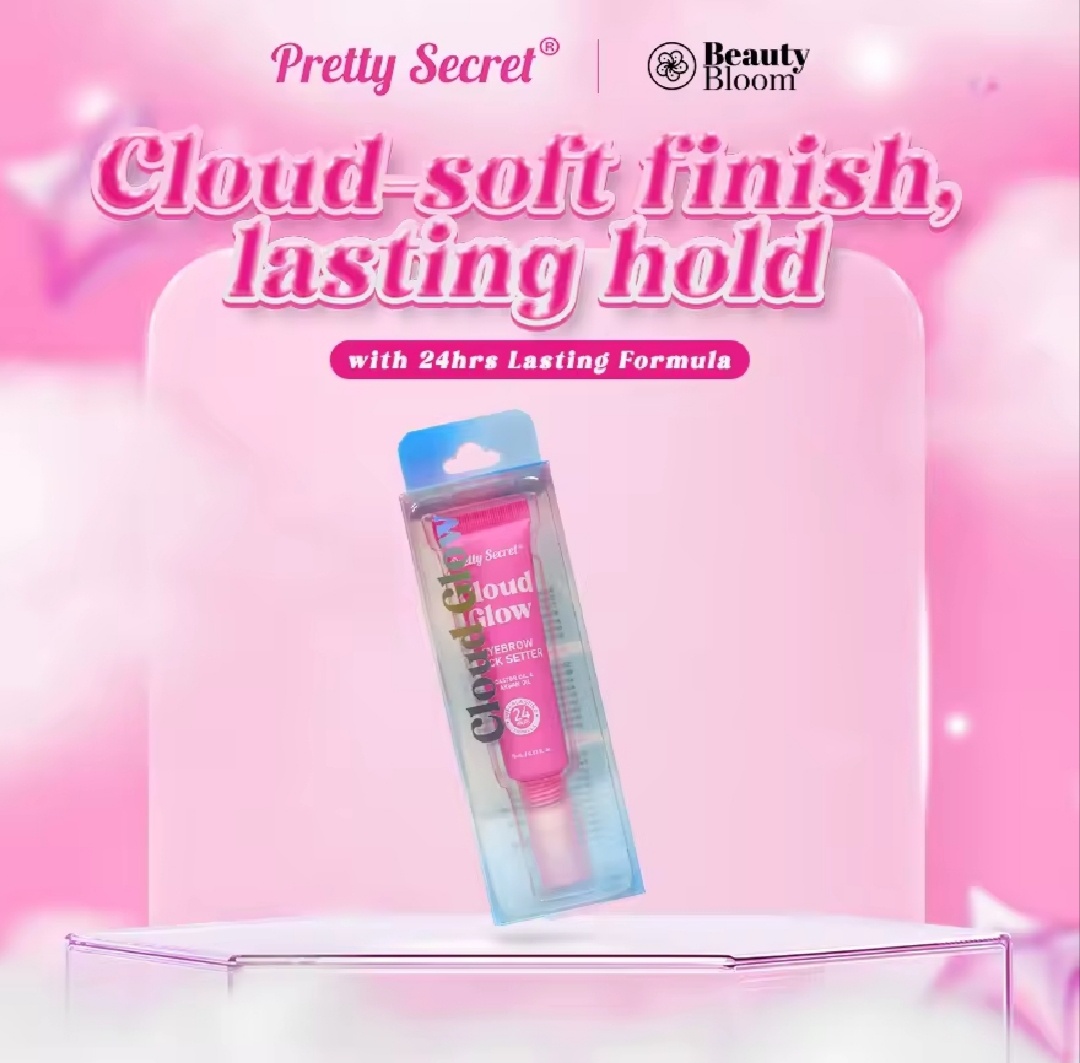
Eyebrow Lock Setter 15ml

Highlights
Other Ingredients
Skim through
| Ingredient name | what-it-does | irr., com. | ID-Rating |
|---|---|---|---|
| Aqua | solvent | ||
| Ceteareth-30 | surfactant/cleansing, emulsifying | ||
| PVP | viscosity controlling | 0, 0 | |
| Styrene/Acrylates Copolymer | |||
| Polysorbate 20 | emulsifying, surfactant/cleansing | 0, 0 | |
| Glycerin | skin-identical ingredient, moisturizer/humectant | 0, 0 | superstar |
| Phenoxyethanol | preservative | ||
| Parfum | perfuming | icky | |
| Ethylhexylglycerin | preservative | ||
| Ricinus Communis (Castor) Seed Oil | emollient, perfuming | 0, 0-1 | |
| Argania Spinosa Kernel Oil | antioxidant, emollient | goodie | |
| Caprylyl Glycol | moisturizer/humectant, emollient |
Pretty Secret Eyebrow Lock Setter 15mlIngredients explained
Good old water, aka H2O. The most common skincare ingredient of all. You can usually find it right in the very first spot of the ingredient list, meaning it’s the biggest thing out of all the stuff that makes up the product.
It’s mainly a solvent for ingredients that do not like to dissolve in oils but rather in water.
Once inside the skin, it hydrates, but not from the outside - putting pure water on the skin (hello long baths!) is drying.
One more thing: the water used in cosmetics is purified and deionized (it means that almost all of the mineral ions inside it is removed). Like this, the products can stay more stable over time.
 We don't have description for this ingredient yet.
These three letters stand for Poly Vinyl Pyrollidone, a big molecule created from repeated units of Vinyl Pyrrolidone, aka VP. Its main thing is being an important film former. It was the first synthetic polymer introduced as a hair fixative in the 1950s instead of insect-derived Shellac.
So PVP likes to attach itself to surfaces such as the hair and the skin and forms a nice, thin, even film there. The film is useful for holding a hairstyle or extending the wear of color cosmetics and sunscreens. The disadvantage of PVP is that the film is a bit brittle and that PVP loves water (hygroscopic) that tends to destroy the film. This is the reason why hair styled with a PVP based product loses its style in high humidity. To fix this problem, there are now several versions of VP containing film formers that are less sensitive to humidity, for example, the molecule called VP/VA Copolymer.
A film-forming polymer (big molecule from repeated subunits) to create water-resistant sunscreen formulas. It also improves the SPF value of sunscreen formulas (approx. 11-18% boost in SPF per 1% Styrene/Acrylates Copolymer).
It's a common little helper ingredient that helps water and oil to mix together. Also, it can help to increase the solubility of some other ingredients in the formula.
- A natural moisturizer that’s also in our skin
- A super common, safe, effective and cheap molecule used for more than 50 years
- Not only a simple moisturizer but knows much more: keeps the skin lipids between our skin cells in a healthy (liquid crystal) state, protects against irritation, helps to restore barrier
- Effective from as low as 3% with even more benefits for dry skin at higher concentrations up to 20-40%
- High-glycerin moisturizers are awesome for treating severely dry skin
It’s pretty much the current IT-preservative. It’s safe and gentle, but even more importantly, it’s not a feared-by-everyone-mostly-without-scientific-reason paraben.
It’s not something new: it was introduced around 1950 and today it can be used up to 1% worldwide. It can be found in nature - in green tea - but the version used in cosmetics is synthetic.
Other than having a good safety profile and being quite gentle to the skin it has some other advantages too. It can be used in many types of formulations as it has great thermal stability (can be heated up to 85°C) and works on a wide range of pH levels (ph 3-10).
It’s often used together with ethylhexylglycerin as it nicely improves the preservative activity of phenoxyethanol.
Exactly what it sounds: nice smelling stuff put into cosmetic products so that the end product also smells nice. Fragrance in the US and parfum in the EU is a generic term on the ingredient list that is made up of 30 to 50 chemicals on average (but it can have as much as 200 components!).
If you are someone who likes to know what you put on your face then fragrance is not your best friend - there's no way to know what’s really in it.
Also, if your skin is sensitive, fragrance is again not your best friend. It’s the number one cause of contact allergy to cosmetics. It’s definitely a smart thing to avoid with sensitive skin (and fragrance of any type - natural is just as allergic as synthetic, if not worse!).
If you have spotted ethylhexylglycerin on the ingredient list, most probably you will see there also the current IT-preservative, phenoxyethanol. They are good friends because ethylhexylglycerin can boost the effectiveness of phenoxyethanol (and other preservatives) and as an added bonus it feels nice on the skin too.
Also, it's an effective deodorant and a medium spreading emollient.
Castor oil is sourced from the castor bean plant native to tropical areas in Eastern Africa and the Mediterranean Basin. It is an age-old ingredient (it’s over 4,000 years old!) with many uses including as a shoe polish, food additive and motor lubricant. You would be reasonable to think that putting shoe polish on your face wouldn’t be the best idea, but it turns out castor oil has some unique properties that make it a stalwart in thick and gloss-giving formulas (think lipsticks and highlighters).
So what is so special about it? The answer is its main fatty acid, called ricinoleic acid (85-95%). Unlike other fatty acids, ricinoleic acid has an extra water-loving part (aka -OH group) on its fatty chain that gives Castor Oil several unique properties. First, it is thicker than other oils, then its solubility is different (e.g. dissolves in alcohol but not in mineral oil), and it allows all kinds of chemical modifications other oils do not, hence the lots of Castor oil-derived ingredients. It is also more glossy than other oils, in fact, it creates the highest gloss of all natural oils when applied to the skin. Other than that, it is a very effective emollient and occlusive that reduces skin moisture loss so it is quite common in smaller amounts in moisturizers.
While it is very unlikely (and this is true for pretty much every ingredient), cases of reactions to castor oil have been reported, so if your skin is sensitive, it never hurts to patch test.
When it comes to cosmetic oils and hype, argan oil is for sure leading the way. Dubbed as the "liquid gold of Morocco", we have to admit we have some trouble determining why this oil enjoys such a special miracle status. Not that it's not good, it is good, even great but reading the research about argan and a bunch of other plant oils we just do not see the big, unique differentiating factor (though that might be our fault not reading enough, obvs.)
So, argan oil comes from the kernel of the argan fruit that comes from the argan tree that grows only in Morocco. The tree is slow growing and getting the oil is a hard job. The traditional process is that the ripe argan fruits fall from the tree, then goats eat them up and poop out the seeds. The seeds are collected and smashed with a stone to get the kernels inside. This part is the hard one as the seeds have extremely hard shells. Once the kernels are obtained, the oil is pressed out from them (the kernels contain about 50% oil).
As for skincare, argan oil is loaded with lots of skin goodies (but so are many other plant oils): it contains 80% nourishing and moisturizing unsaturated fatty acids, mainly oleic (38-50%), linoleic (28-38%) and palmitic (10-18%). It also contains a relatively large amount of antioxidant vitamin E (600-900 mg/kg, about twice as much as olive), small amounts of antioxidant phenols (including caffeic acid, ferulic acid, and epicatechin), as well as some rare sterols with soothing and anti-inflammatory properties.
Thanks to all the above goodness in argan oil, it can greatly nourish and moisturize the skin and hair. It's also claimed to be able to neutralize collagen-damaging free radicals, help reduce scars, and revitalize and improve skin elasticity. You can even read that argan might help acne-prone skin, but being a high oleic oil, we would be careful with that.
All in all, argan oil is a real goodie but we do not fully understand the special miracle status it enjoys.
It’s a handy multi-tasking ingredient that gives the skin a nice, soft feel. At the same time, it also boosts the effectiveness of other preservatives, such as the nowadays super commonly used phenoxyethanol.
The blend of these two (caprylyl glycol + phenoxyethanol) is called Optiphen, which not only helps to keep your cosmetics free from nasty things for a long time but also gives a good feel to the finished product. It's a popular duo.
You may also want to take a look at...
| what‑it‑does | solvent |
| what‑it‑does | surfactant/cleansing | emulsifying |
| what‑it‑does | viscosity controlling |
| irritancy, com. | 0, 0 |
| what‑it‑does | emulsifying | surfactant/cleansing |
| irritancy, com. | 0, 0 |
| what‑it‑does | skin-identical ingredient | moisturizer/humectant |
| irritancy, com. | 0, 0 |
| what‑it‑does | preservative |
| what‑it‑does | perfuming |
| what‑it‑does | preservative |
| what‑it‑does | emollient | perfuming |
| irritancy, com. | 0, 0-1 |
| what‑it‑does | antioxidant | emollient |
| what‑it‑does | moisturizer/humectant | emollient |