




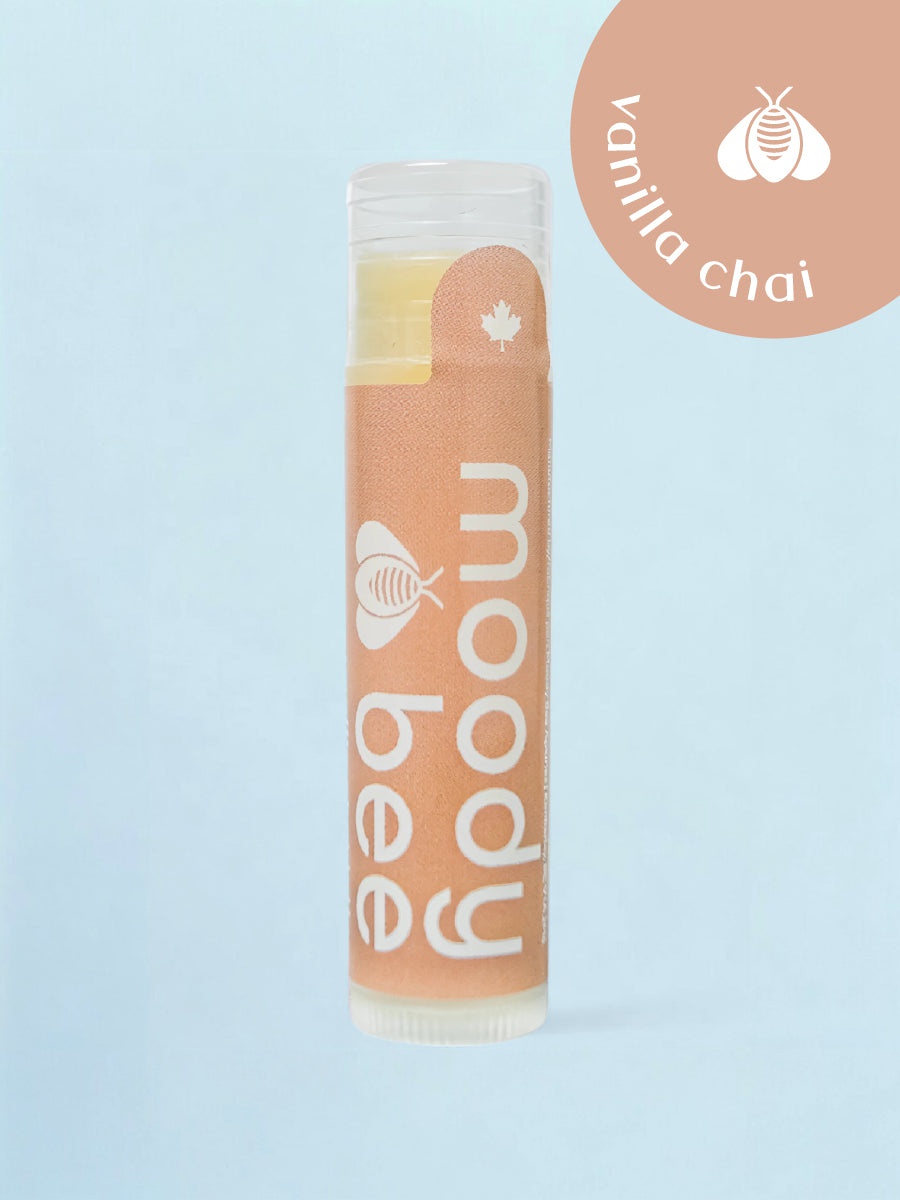
Ingredients overview
Highlights
Skim through
| Ingredient name | what-it-does | irr., com. | ID-Rating |
|---|---|---|---|
| Sweet Almond Oil | emollient | 0, 1-3 | goodie |
| Beeswax | emollient, viscosity controlling, emulsifying, perfuming | 0, 0-2 | |
| Grapeseed Oil | antioxidant, emollient | goodie | |
| Carrot Tissue Oil | emollient | ||
| Avocado Oil | antioxidant, emollient | 0, 0-3 | goodie |
| Hemp Seed Oil | emollient | ||
| Evening Primrose Oil | soothing, emollient | 2, 3 | goodie |
| Vanilla Flavour | |||
| Vitamin E | antioxidant | 0-3, 0-3 | goodie |
Moody Bee Vanilla Chai Latte Lip BalmIngredients explained
The emollient plant oil that comes from almonds. Similar to other plant oils, it is loaded with skin-nourishing fatty acids (oleic acid - 55-86% and linoleic acid 7-35%) and contains several other skin goodies such as antioxidant vitamin E and vitamin B versions.
It's a nice, basic oil that is often used due to its great smoothing, softening and moisturizing properties. It's also particularly good at treating dry brittle nails (source).
It's the yellow, solid stuff that you probably know from beeswax candles. It's a natural material produced by honey bees to build their honeycomb.
As for skincare, it's used as an emollient and thickening agent. It's super common in lip balms and lipsticks.
A goodie plant oil coming from the polyphenol-rich seeds of the grape. It's a light emollient oil that makes your skin feel smooth and nice and also contains a bunch of good-for-the-skin stuff. It's a great source of antioxidant polyphenols, barrier repair fatty acid linoleic acid (about 55-77%, while oleic acid is about 12-27%) and antioxidant, skin-protectant vitamin E.
The oil coming from the seeds of the carrot, the orange root vegetable we all know and eat regularly. This oil is a really tricky one, as it can refer to two types of oil that can both be extracted from the carrot seeds: the essential oil (about 0.83% yield) and the fixed oil (about 7.84% yield).
The two seed oils are very different and to make matters even worse these two oils are also very different from carrot root oil, or carrot oil, that is basically carrot root extract macerated in a carrier oil such as sunflower or olive oil and is the one that contains the vitamin A precursor, carotene.
Let's start with the fixed oil: it's a nice emollient plant oil that is loaded with moisturizing fatty acids (petroselinic acid - 60% and linoleic acid - 12% are the main ones). Other important components are carotol (30%) and daucol (12%) that give the seed oil antifungal and antioxidant properties. Browsing cosmetic manufacturer info, the oil is also often described as revitalizing, toning and stimulating.
As for the essential oil, it is a light yellow colored oil with a rich, spicy and earthy fragrance. Its main component is carotol (about 65%) but similar to other essential oils, it is a chemically complex mixture with lots of compounds in small amounts. The essential oil also has antifungal and antioxidant properties but also contains fragrant components that might irritate sensitive skin types.
The oil coming from the pulp of one of the most nutritious fruits in the world, the avocado. It's loaded with the nourishing and moisturizing fatty acid, oleic (70%) and contains some others including palmitic (10%) and linoleic acid (8%). It also contains a bunch of minerals and vitamins A, E and D.
Avocado oil has extraordinary skin penetration abilities and can nourish different skin layers. It's a very rich, highly moisturizing emollient oil that makes the skin smooth and nourished. Thanks to its vitamin E content it also has some antioxidant properties. As a high-oleic plant oil, it is recommended for dry skin.
 We don't have description for this ingredient yet.
The oil coming from the seeds of the nice, little, yellow-flowered plant called Evening Primrose. Similar to other plant oils, it's loaded with nourishing and moisturizing fatty acids. It's a very rich source of linoleic acid (66-76%), and also contains the soothing and healing superstar fatty acid, gamma-linolenic acid (aka GLA, 7-12%) (Btw, the richest known source of GLA is the borage oil, but evening primrose still counts as a very good source of it). It also contains oleic acid, but not too much around 6-15%.
Since the 1980's, EPO is a well-known food supplement and there are quite a lot of studies examining what happens if you take it orally. It seems to be helpful with a bunch of things: atopic dermatitis, dry eyes, brittle nails, sunburn and even acne.
As for the skin, it's a great hydrating plant oil, that can also reduce inflammation and irritation. It's a superb healing agent that can truly help dry skin, not just on the surface by covering it (and not letting water to evaporate) but by initiating structural changes within the skin. If that's not enough, it also helps skin cell regeneration.
All in all, a real goodie especially for dry, easily irritated skin.
We don't have description for this ingredient yet.
- Primary fat-soluble antioxidant in our skin
- Significant photoprotection against UVB rays
- Vit C + Vit E work in synergy and provide great photoprotection
- Has emollient properties
- Easy to formulate, stable and relatively inexpensive
You may also want to take a look at...
| what‑it‑does | emollient |
| irritancy, com. | 0, 1-3 |
| what‑it‑does | emollient | viscosity controlling | emulsifying | perfuming |
| irritancy, com. | 0, 0-2 |
| what‑it‑does | antioxidant | emollient |
| what‑it‑does | emollient |
| what‑it‑does | antioxidant | emollient |
| irritancy, com. | 0, 0-3 |
| what‑it‑does | emollient |
| what‑it‑does | soothing | emollient |
| irritancy, com. | 2, 3 |
| what‑it‑does | antioxidant |
| irritancy, com. | 0-3, 0-3 |