




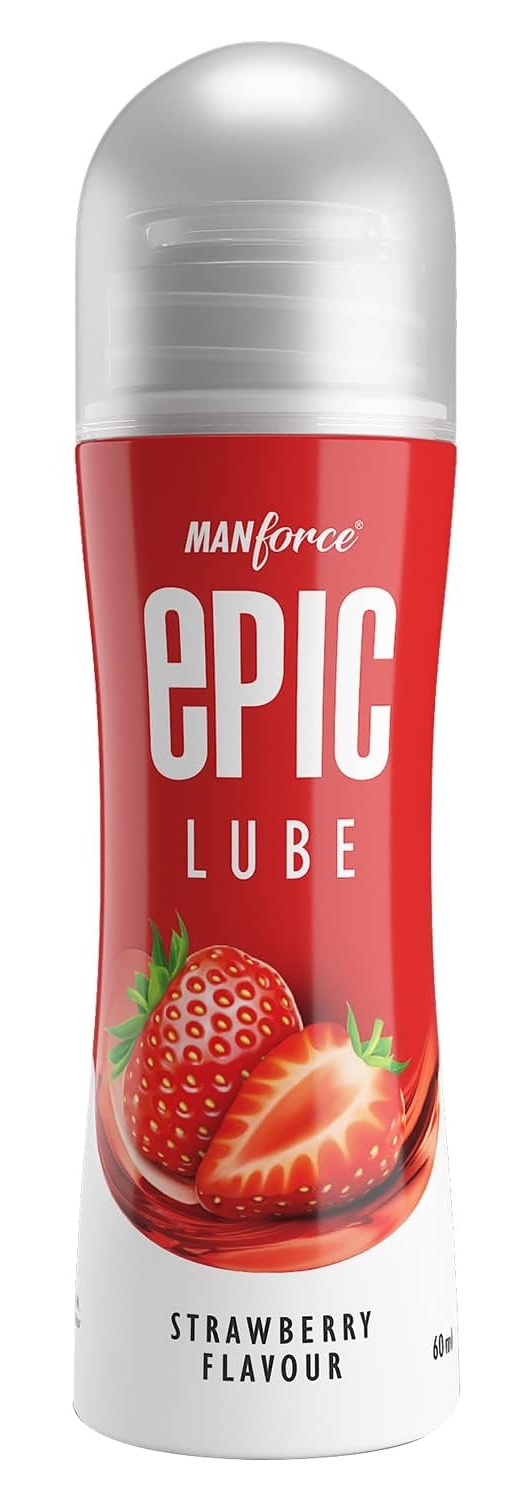
Ingredients overview
 INCI photo pending approval
Highlights
Key Ingredients
Other Ingredients
Skim through
Manforce LubeIngredients explained
Good old water, aka H2O. The most common skincare ingredient of all. You can usually find it right in the very first spot of the ingredient list, meaning it’s the biggest thing out of all the stuff that makes up the product.
It’s mainly a solvent for ingredients that do not like to dissolve in oils but rather in water.
Once inside the skin, it hydrates, but not from the outside - putting pure water on the skin (hello long baths!) is drying.
One more thing: the water used in cosmetics is purified and deionized (it means that almost all of the mineral ions inside it is removed). Like this, the products can stay more stable over time.
- A natural moisturizer that’s also in our skin
- A super common, safe, effective and cheap molecule used for more than 50 years
- Not only a simple moisturizer but knows much more: keeps the skin lipids between our skin cells in a healthy (liquid crystal) state, protects against irritation, helps to restore barrier
- Effective from as low as 3% with even more benefits for dry skin at higher concentrations up to 20-40%
- High-glycerin moisturizers are awesome for treating severely dry skin
- It's a helper ingredient that improves the freeze-thaw stability of products
- It's also a solvent, humectant and to some extent a penetration enhancer
- It has a bad reputation among natural cosmetics advocates but cosmetic scientists and toxicology experts do not agree (read more in the geeky details section)
The main part of a moisturizing complex called Aquaxyl. Comes from two water-binding plant sugars, glucose and xylitol. According to the manufacturer, Aquaxyl is close to a magic moisturizer that not only simply moisturizes, but can "harmonize the skin's hydrous flow".
This means that on the one side it can optimize water reserves by increasing important NMFs (natural moisturizing factors - things that are naturally in the skin and help to keep it hydrated) - like hyaluronic acid and chondroitin sulfate - in the skin. On the other side, it also limits water loss by improving the skin barrier with increased lipid (ceramides and cholesterol) and protein synthesis.
In vivo (made on real people) tests show that 3% Aquaxyl not only increases the water content of the outer layer instantly and in the long run but it also visibly improves cracked, dry skin and smoothes the skin surface after a month of treatment.
The hydrating effect of Aquaxyl was also examined in a comparative study in the Journal of Cosmetic Dermatology. Four humectants were examined in combination with 5% glycerin in a hydrogel formula and one with 4% Aquaxyl performed as well as the well-known moisturizer, urea and somewhat better than the formula containing NMF components or hydrating plant extract called Imperata Cylindrica.
All in all, Aquaxyl is a goodie and if you have dehydrated, dry skin it's something to look at.
A sugar derived moisturizer that's part of a moisturizing trio called Aquaxyl. You can read more about its magic properties at xylitylglucoside.
A type of sugar that's part of a moisturizing trio called Aquaxyl. You can read more about its magic properties at xylitylglucoside.
 We don't have description for this ingredient yet.
We don't have description for this ingredient yet.
- It's a helper ingredient that improves the freeze-thaw stability of products
- It's also a solvent, humectant and to some extent a penetration enhancer
- It has a bad reputation among natural cosmetics advocates but cosmetic scientists and toxicology experts do not agree (read more in the geeky details section)
It's a common little helper ingredient that helps water and oil to mix together. Also, it can help to increase the solubility of some other ingredients in the formula.
A nice little helper ingredient that can thicken up cosmetic products and create beautiful gel formulas. It's derived from cellulose, the major component of the cell wall of green plants. It is compatible with most co-ingredients and gives a very good slip to the formulas.
We don't have description for this ingredient yet.
An Ecocert-approved, natural preservative that counts as gentle and non-irritating to the skin. Usually, it comes to the formula as part of a preservative blend as it's not enough on its own.
We don't have description for this ingredient yet.
Super common little helper ingredient that helps products to remain nice and stable for a longer time. It does so by neutralizing the metal ions in the formula (that usually get into there from water) that would otherwise cause some not so nice changes.
It is typically used in tiny amounts, around 0.1% or less.
Sweet, exotic and floral, it’ no surprise that Ylang Ylang is a popular essential oil. It is coming from the yellow, fragrant flowers of the Cananga tree native to tropical Asia and, similar to other essential oils, it is a chemically complex mixture with several pros and cons.
Unfortunately, these are a bit tricky to pin down as the composition varies largely depending on where it is sourced, how the oil is extracted and the grade of it that is used in the product, but we’ll do our best!
Let’s start with the easy stuff. The main components are fragrant molecules, including super common linalool (1-19%), benzyl benzoate (2-10%) and several others adding up to a max amount of 37.6% of EU sensitizers. The most expensive Extra grade is the most fragrant (has more benzyl acetate and cresyl methyl ether) and is used in high-end perfumes, while the First and Second grades are less fragrant, and used mainly in cosmetics.
Other than smelling nice and making cosmetic formulas also smell nice, Ylang Ylang might have some antimicrobial and antioxidant benefits and also works as an insect repellent. Its nice smell is also commonly known as being relaxing and calming (also backed up by a few recent studies), but it is an aromatherapy use case (when inhaled) so this probably does not count much skincare-wise.
On the other hand, the nice smell also means allergen fragrant components and 37.6% of EU sensitizers counts as quite high and the oil is considered to have high skin sensitization potential. It is a good idea to avoid if your skin is sensitive.
You may also want to take a look at...
| what‑it‑does | solvent |
| what‑it‑does | skin-identical ingredient | moisturizer/humectant |
| irritancy, com. | 0, 0 |
| what‑it‑does | moisturizer/humectant | solvent |
| irritancy, com. | 0, 0 |
| what‑it‑does | moisturizer/humectant |
| what‑it‑does | moisturizer/humectant |
| what‑it‑does | moisturizer/humectant |
| what‑it‑does | perfuming |
| what‑it‑does | solvent |
| what‑it‑does | perfuming |
| what‑it‑does | perfuming | solvent |
| what‑it‑does | antimicrobial/antibacterial | solvent |
| irritancy, com. | 0, 0 |
| what‑it‑does | moisturizer/humectant | solvent |
| irritancy, com. | 0, 0 |
| what‑it‑does | emulsifying | surfactant/cleansing |
| irritancy, com. | 0, 0 |
| what‑it‑does | viscosity controlling |
| what‑it‑does | viscosity controlling |
| what‑it‑does | preservative |
| what‑it‑does | chelating |
| what‑it‑does | perfuming |