




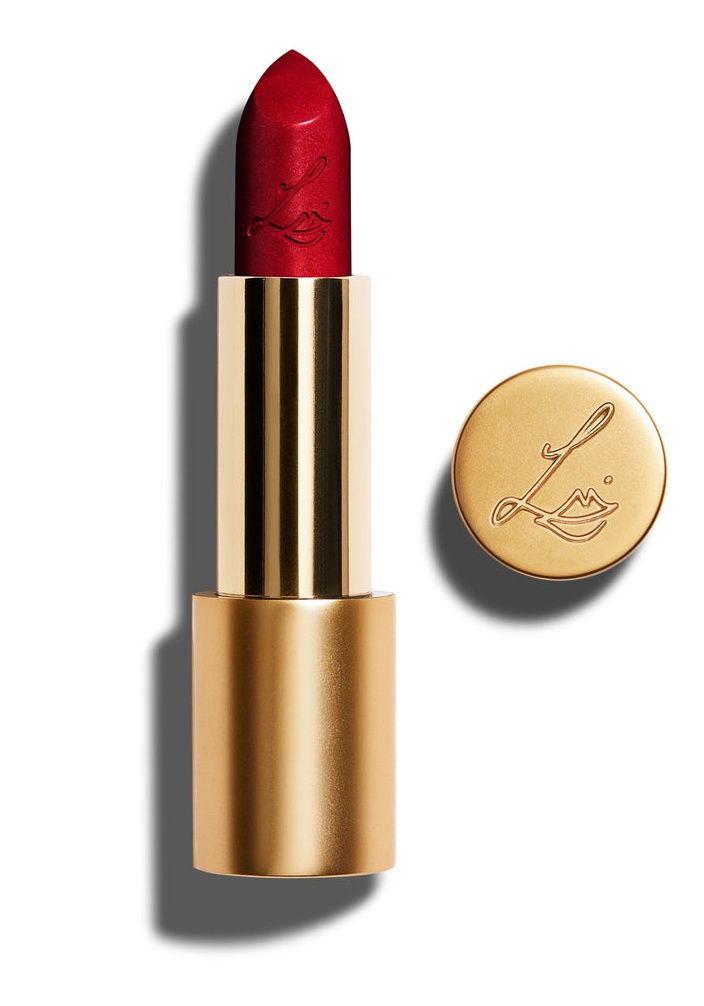
Mimetic Pearl Lip Colour
Ingredients overview
Highlights
Skim through
Lisa Eldridge Mimetic Pearl Lip ColourIngredients explained
A super common emollient that makes your skin feel nice and smooth. It comes from coconut oil and glycerin, it’s light-textured, clear, odorless and non-greasy. It’s a nice ingredient that just feels good on the skin, is super well tolerated by every skin type and easy to formulate with. No wonder it’s popular.
Polyethylene is the most common plastic in the world. It is a super versatile polymer (molecule from repeated subunits) and when it comes to cosmetics, it is often referred to as microbeads. Well, it used to be referred to as microbeads, as it was banned in 2015 in the " Microbead-Free Waters Act" due to the small plastic spheres accumulating in the waters and looking like food to fish. Well done by Obama.
But being versatile means that polyethylene does not only come as scrub particles but also as a white wax. In its wax-form, it is still well, alive and pretty popular. It thickens up water-free formulas, increases hardness and raises the melting point of emulsions and water-less balms. It is particularly common in cleansing balms and stick-type makeup products due to its ability to add body, hardness and slip to these formulas.
A super versatile and common mineral powder that comes in different particle sizes. It is a multi-tasker used to improve skin feel, increase product slip, give the product light-reflecting properties, enhance skin adhesion or serve as an anti-caking agent.
It is also the most commonly used "base" material for layered composite pigments such as pearl-effect pigments. In this case, mica is coated with one or more metal oxides (most commonly titanium dioxide) to achieve pearl effect via the physical phenomenon known as interference.
A white powdery thing that's the major component of glass and sand. In cosmetics, it’s often in products that are supposed to keep your skin matte as it has great oil-absorbing abilities. It’s also used as a helper ingredient to thicken up products or suspend insoluble particles.
 We don't have description for this ingredient yet.
A clear, slightly yellow, odorless oil that's a very common, medium-spreading emollient. It makes the skin feel nice and smooth and works in a wide range of formulas.
An organic derivative of hectorite clay, Disteardimonium Hectorite is used as a viscosity controller - it thickens up formulations to make them less runny.
It’s most popular use in cosmetics is in sunscreens, under the trademarked name Bentone 38 from Elementis. According to the manufacturer info, it is a real multi-tasker, including the ability to prevent pigments settling during storage, stabilizing a formula for longer, creating a light and smooth skin feel and enhancing the water-resistance of sunscreen formulas.
Simply alcohol refers to ethanol and it's a pretty controversial ingredient. It has many instant benefits: it's a great solvent, penetration enhancer, creates cosmetically elegant, light formulas, great astringent and antimicrobial. No wonder it's popular in toners and oily skin formulas.
The downside is that it can be very drying if it's in the first few ingredients on an ingredient list.
Some experts even think that regular exposure to alcohol damages skin barrier and causes inflammation though it's a debated opinion. If you wanna know more, we wrote a more detailed explanation about what's the deal with alcohol in skincare products at alcohol denat. (it's also alcohol, but with some additives to make sure no one drinks it).
Pentaerythrityl Tetra-Di-T-Butyl Hydroxyhydrocinnamate is an antioxidant molecule used in small amounts (less than 0.8%) to help products stay nice longer. More specifically, it is great at preventing discoloration or other types of oxidative degradation. It is a trendy alternative to often bad-mouthed synthetic antioxidant and stabilizer, BHT.
Good old water, aka H2O. The most common skincare ingredient of all. You can usually find it right in the very first spot of the ingredient list, meaning it’s the biggest thing out of all the stuff that makes up the product.
It’s mainly a solvent for ingredients that do not like to dissolve in oils but rather in water.
Once inside the skin, it hydrates, but not from the outside - putting pure water on the skin (hello long baths!) is drying.
One more thing: the water used in cosmetics is purified and deionized (it means that almost all of the mineral ions inside it is removed). Like this, the products can stay more stable over time.
We don't have description for this ingredient yet.
We don't have description for this ingredient yet.
A multi-functional helper ingredient that's used mainly as a pigment carrier. The pigment can be an inorganic sunscreen (such as titanium dioxide) or a colorant that is blended with alumina platelets and then often coated with some kind of silicone (such as triethoxycaprylylsilane). This special treatment enables pigments to be evenly dispersed in the formula and to be spread out easily and evenly upon application. It is super useful both for mineral sunscreens as well as for makeup products.
Other than that, alumina can also be used as an absorbent (sometimes combined with the mattifying powder called polymethylsilsesquioxane), a viscosity controlling or an opacifying (reduces the transparency of the formula) agent.
We don't have description for this ingredient yet.
It's the acronym for Butylated Hydroxy Toluene. It's a common synthetic antioxidant that's used as a preservative.
There is some controversy around BHT. It's not a new ingredient, it has been used both as a food and cosmetics additive since the 1970s. Plenty of studies tried to examine if it's a carcinogen or not. This Truth in Aging article details the situation and also writes that all these studies examine BHT when taken orally.
As for cosmetics, the CIR (Cosmetic Ingredient Review) concluded that the amount of BHT used in cosmetic products is low (usually around 0.01-0.1%), it does not penetrate skin far enough to be absorbed into the bloodstream and it is safe to use in cosmetics.
Synthetic Fluorphlogopite is the synthetic version of the super commonly used mineral, Mica. The advantage of being synthetic is that it has a more consistent quality, fewer impurities and an even lower heavy metal content than Mica (not that Mica's heavy metal content is high). It is also more transparent and has improved light reflection.
The two main use cases for Synthetic Fluorphlogopite is being used neat as a superior "filler" or skin tone enhancer or it can also serve as a base for multi-layered, composite pigments such as pearl effect pigments where it is coated with one or more layers of metal oxide, most commonly titanium dioxide.
Far from the tin cans you find in the supermarket, Tin Oxide is mostly used when dealing with so-called effect pigments, tricky composite pigments that can do color travel (change color depending on the viewing angle) or give multiple color effect.
It's often found alongside Mica (as a base material) and Titanium Dioxide (as a coating) to give a glossy, pearlescent effect. Together, they make up a trademarked technology called RonaFlair Blanace from the German manufacturer Merck. According to their info, this combination can balance out undesirable tones in the skin, making it a popular choice for brightening products and highlighters.
Other than that, CosIng (the official EU INCI database) lists its uses as being a bulking agent (to increase the volume of products), as well as a physical exfoliant or an opacifying agent, but being part of composite effect pigments is a much more common use case.
A bit of a sloppy ingredient name as it covers not one but three pigments: red, yellow and black iron oxide.
The trio is invaluable for "skin-colored" makeup products (think your foundation and pressed powder) as blending these three shades carefully can produce almost any shade of natural-looking flesh tones.
Ci 77891 is the color code of titanium dioxide. It's a white pigment with great color consistency and dispersibility.
We don't have description for this ingredient yet.
CI 42090 or Blue 1 is a super common synthetic colorant in beauty & food. Used alone, it adds a brilliant smurf-like blue color, combined with Tartrazine, it gives the fifty shades of green.
Ci 19140 or Tartrazine is a super common colorant in skincare, makeup, medicine & food. It’s a synthetic lemon yellow that's used alone or mixed with other colors for special shades.
FDA says it's possible, but rare, to have an allergic-type reaction to a color additive. As an example, it mentions that Ci 19140 may cause itching and hives in some people but the colorant is always labeled so that you can avoid it if you are sensitive.
You may also want to take a look at...
| what‑it‑does | viscosity controlling |
| what‑it‑does | emollient |
| what‑it‑does | viscosity controlling |
| what‑it‑does | colorant |
| what‑it‑does | viscosity controlling |
| what‑it‑does | viscosity controlling |
| what‑it‑does | emulsifying | viscosity controlling |
| what‑it‑does | emollient | perfuming |
| what‑it‑does | abrasive/scrub |
| what‑it‑does | viscosity controlling |
| what‑it‑does | antimicrobial/antibacterial | solvent | viscosity controlling |
| what‑it‑does | antioxidant | preservative |
| what‑it‑does | solvent |
| what‑it‑does | abrasive/scrub |
| what‑it‑does | viscosity controlling | abrasive/scrub |
| what‑it‑does | antioxidant | preservative |
| what‑it‑does | viscosity controlling |
| what‑it‑does | colorant | abrasive/scrub | viscosity controlling |
| what‑it‑does | colorant |
| irritancy, com. | 0, 0 |
| what‑it‑does | colorant |
| irritancy, com. | 0, 0 |
| what‑it‑does | colorant |
| irritancy, com. | 0, 1 |
| what‑it‑does | colorant |
| what‑it‑does | colorant |