




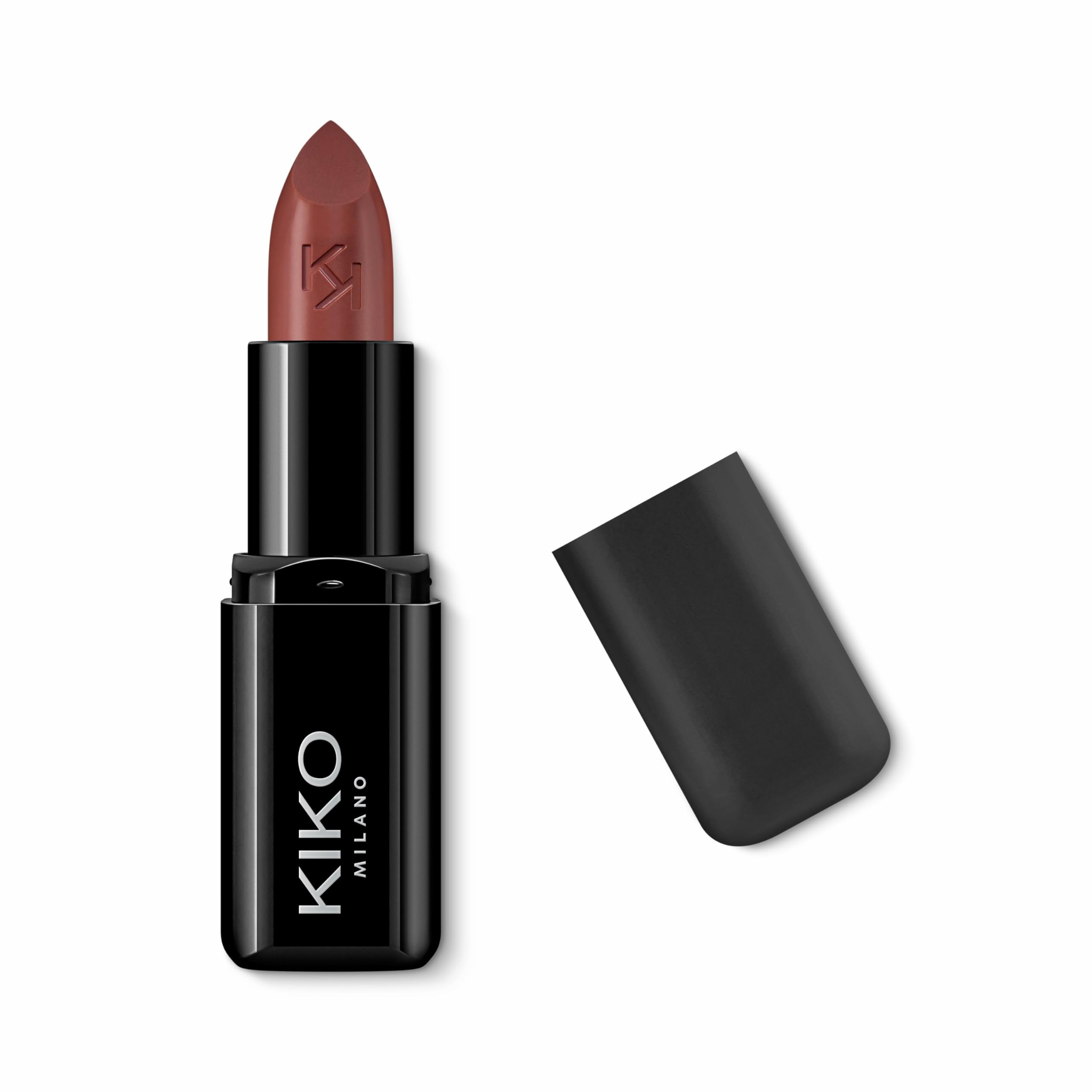
Smart Fusion Lipstick
Ingredients overview
Highlights
Other Ingredients
Skim through
KIKO Milano Smart Fusion LipstickIngredients explained
A super common emollient that makes your skin feel nice and smooth. It comes from coconut oil and glycerin, it’s light-textured, clear, odorless and non-greasy. It’s a nice ingredient that just feels good on the skin, is super well tolerated by every skin type and easy to formulate with. No wonder it’s popular.
Polyethylene is the most common plastic in the world. It is a super versatile polymer (molecule from repeated subunits) and when it comes to cosmetics, it is often referred to as microbeads. Well, it used to be referred to as microbeads, as it was banned in 2015 in the " Microbead-Free Waters Act" due to the small plastic spheres accumulating in the waters and looking like food to fish. Well done by Obama.
But being versatile means that polyethylene does not only come as scrub particles but also as a white wax. In its wax-form, it is still well, alive and pretty popular. It thickens up water-free formulas, increases hardness and raises the melting point of emulsions and water-less balms. It is particularly common in cleansing balms and stick-type makeup products due to its ability to add body, hardness and slip to these formulas.
 We don't have description for this ingredient yet.
Officially, CosIng (the official EU ingredient database) lists Aluminum Hydroxide 's functions as opacifying (making the product white and non-transparent), as well as emollient and skin protectant.
However, with a little bit of digging, it turns out Aluminum Hyroxide often moonlights as a protective coating for UV filter superstar Titanium Dioxide. Specifically, it protects our skin from the harmful effects of nasty Reactive Oxygen Species (free radicals derived from oxygen such as Superoxide and Hydrogen Peroxide) generated when Titanium Dioxide is exposed to UV light. Btw, chlorine in swimming pool water depletes this protective coating, so one more reason to reapply your sunscreen after a dip in the pool on holiday.
Other than that, Aluminum Hydroxide also often shows up in composite pigment technologies where it is used the other way around (as the base material and not as the coating material) and helps to achieve higher color coverage with less pigment.
We don't have description for this ingredient yet.
A super versatile and common mineral powder that comes in different particle sizes. It is a multi-tasker used to improve skin feel, increase product slip, give the product light-reflecting properties, enhance skin adhesion or serve as an anti-caking agent.
It is also the most commonly used "base" material for layered composite pigments such as pearl-effect pigments. In this case, mica is coated with one or more metal oxides (most commonly titanium dioxide) to achieve pearl effect via the physical phenomenon known as interference.
We don't have description for this ingredient yet.
When it comes to cosmetic oils and hype, argan oil is for sure leading the way. Dubbed as the "liquid gold of Morocco", we have to admit we have some trouble determining why this oil enjoys such a special miracle status. Not that it's not good, it is good, even great but reading the research about argan and a bunch of other plant oils we just do not see the big, unique differentiating factor (though that might be our fault not reading enough, obvs.)
So, argan oil comes from the kernel of the argan fruit that comes from the argan tree that grows only in Morocco. The tree is slow growing and getting the oil is a hard job. The traditional process is that the ripe argan fruits fall from the tree, then goats eat them up and poop out the seeds. The seeds are collected and smashed with a stone to get the kernels inside. This part is the hard one as the seeds have extremely hard shells. Once the kernels are obtained, the oil is pressed out from them (the kernels contain about 50% oil).
As for skincare, argan oil is loaded with lots of skin goodies (but so are many other plant oils): it contains 80% nourishing and moisturizing unsaturated fatty acids, mainly oleic (38-50%), linoleic (28-38%) and palmitic (10-18%). It also contains a relatively large amount of antioxidant vitamin E (600-900 mg/kg, about twice as much as olive), small amounts of antioxidant phenols (including caffeic acid, ferulic acid, and epicatechin), as well as some rare sterols with soothing and anti-inflammatory properties.
Thanks to all the above goodness in argan oil, it can greatly nourish and moisturize the skin and hair. It's also claimed to be able to neutralize collagen-damaging free radicals, help reduce scars, and revitalize and improve skin elasticity. You can even read that argan might help acne-prone skin, but being a high oleic oil, we would be careful with that.
All in all, argan oil is a real goodie but we do not fully understand the special miracle status it enjoys.
Sunflower does not need a big intro as you probably use it in the kitchen as cooking oil, or you munch on the seeds as a healthy snack or you adore its big, beautiful yellow flower during the summer - or you do all of these and probably even more. And by even more we mean putting it all over your face as sunflower oil is one of the most commonly used plant oils in skincare.
It’s a real oldie: expressed directly from the seeds, the oil is used not for hundreds but thousands of years. According to The National Sunflower Association, there is evidence that both the plant and its oil were used by American Indians in the area of Arizona and New Mexico about 3000 BC. Do the math: it's more than 5000 years – definitely an oldie.
Our intro did get pretty big after all (sorry for that), so let's get to the point finally: sunflower oil - similar to other plant oils - is a great emollient that makes the skin smooth and nice and helps to keep it hydrated. It also protects the surface of the skin and enhances the damaged or irritated skin barrier. Leslie Bauman notes in Cosmetic Dermatology that one application of sunflower oil significantly speeds up the recovery of the skin barrier within an hour and sustains the results 5 hours after using it.
It's also loaded with fatty acids (mostly linoleic (50-74%) and oleic (14-35%)). The unrefined version (be sure to use that on your skin!) is especially high in linoleic acid that is great even for acne-prone skin. Its comedogen index is 0, meaning that it's pretty much an all skin-type oil.
Truth be told, there are many great plant oils and sunflower oil is definitely one of them.
Pentaerythrityl Tetra-Di-T-Butyl Hydroxyhydrocinnamate is an antioxidant molecule used in small amounts (less than 0.8%) to help products stay nice longer. More specifically, it is great at preventing discoloration or other types of oxidative degradation. It is a trendy alternative to often bad-mouthed synthetic antioxidant and stabilizer, BHT.
We don't have description for this ingredient yet.
We don't have description for this ingredient yet.
Far from the tin cans you find in the supermarket, Tin Oxide is mostly used when dealing with so-called effect pigments, tricky composite pigments that can do color travel (change color depending on the viewing angle) or give multiple color effect.
It's often found alongside Mica (as a base material) and Titanium Dioxide (as a coating) to give a glossy, pearlescent effect. Together, they make up a trademarked technology called RonaFlair Blanace from the German manufacturer Merck. According to their info, this combination can balance out undesirable tones in the skin, making it a popular choice for brightening products and highlighters.
Other than that, CosIng (the official EU INCI database) lists its uses as being a bulking agent (to increase the volume of products), as well as a physical exfoliant or an opacifying agent, but being part of composite effect pigments is a much more common use case.
Ci 77891 is the color code of titanium dioxide. It's a white pigment with great color consistency and dispersibility.
We don't have description for this ingredient yet.
CI 42090 or Blue 1 is a super common synthetic colorant in beauty & food. Used alone, it adds a brilliant smurf-like blue color, combined with Tartrazine, it gives the fifty shades of green.
Ci 19140 or Tartrazine is a super common colorant in skincare, makeup, medicine & food. It’s a synthetic lemon yellow that's used alone or mixed with other colors for special shades.
FDA says it's possible, but rare, to have an allergic-type reaction to a color additive. As an example, it mentions that Ci 19140 may cause itching and hives in some people but the colorant is always labeled so that you can avoid it if you are sensitive.
We don't have description for this ingredient yet.
A cosmetic colorant used as a reddish pigment.
Some version of it is a pH-sensitive dye that enables a colorless lip balm to turn red/pink upon application.
You may also want to take a look at...
| what‑it‑does | viscosity controlling |
| what‑it‑does | emollient |
| what‑it‑does | viscosity controlling |
| what‑it‑does | viscosity controlling |
| what‑it‑does | emollient | moisturizer/humectant | viscosity controlling |
| what‑it‑does | viscosity controlling |
| what‑it‑does | colorant |
| what‑it‑does | solvent | viscosity controlling |
| what‑it‑does | abrasive/scrub |
| what‑it‑does | antioxidant | emollient |
| what‑it‑does | soothing |
| what‑it‑does | emollient |
| irritancy, com. | 0, 0 |
| what‑it‑does | antioxidant | preservative |
| what‑it‑does | colorant | abrasive/scrub | viscosity controlling |
| what‑it‑does | colorant |
| irritancy, com. | 0, 0 |
| what‑it‑does | colorant |
| irritancy, com. | 0, 1 |
| what‑it‑does | colorant |
| what‑it‑does | colorant |
| what‑it‑does | colorant |
| what‑it‑does | colorant |
| irritancy, com. | 0, 2 |