




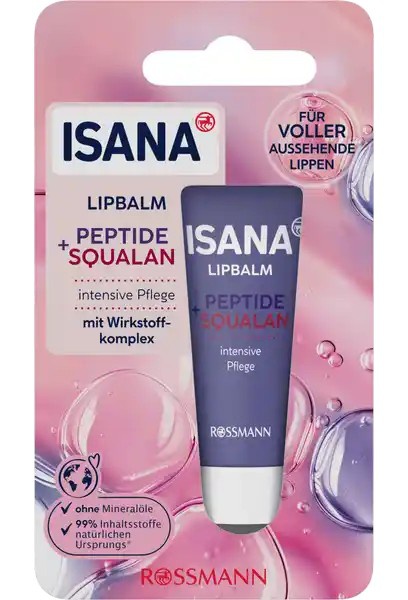
Ingredients overview
Highlights
Skim through
| Ingredient name | what-it-does | irr., com. | ID-Rating |
|---|---|---|---|
| C12-18 Alkanoyl Glycerin/Sebacic Acid Copolymer | |||
| Ricinus Communis Seed Oil | emollient, perfuming | 0, 0-1 | |
| Cocos Nucifera Oil | emollient, perfuming | 0, 4 | goodie |
| Butyrospermum Parkii Butter | emollient | goodie | |
| Caprylic/Capric Triglyceride | emollient | ||
| Rhus Verniciflua Peel Cera | emollient | ||
| Squalane | skin-identical ingredient, emollient | 0, 1 | goodie |
| Hydrogenated Castor Oil | emollient, viscosity controlling, emulsifying, surfactant/cleansing | 0, 1 | |
| Copernicia Cerifera Cera | emollient | 0, 1 | |
| Silica | viscosity controlling | ||
| Cetearyl Ethylhexanoate | emollient | ||
| Parfum | perfuming | icky | |
| Tocopherol | antioxidant | 0-3, 0-3 | goodie |
| Sorbitan Isostearate | emulsifying | 0, 1-2 | |
| Portulaca Pilosa Extract | |||
| Dimethyl Phenethyl Acetate | |||
| Aqua | solvent | ||
| Sucrose Cocoate | emulsifying | ||
| Alcohol | antimicrobial/antibacterial, solvent, viscosity controlling | icky | |
| Palmitoyl Tripeptide-38 | cell-communicating ingredient | goodie |
Isana Peptide & Squalan LipbalmIngredients explained
 We don't have description for this ingredient yet.
Castor oil is sourced from the castor bean plant native to tropical areas in Eastern Africa and the Mediterranean Basin. It is an age-old ingredient (it’s over 4,000 years old!) with many uses including as a shoe polish, food additive and motor lubricant. You would be reasonable to think that putting shoe polish on your face wouldn’t be the best idea, but it turns out castor oil has some unique properties that make it a stalwart in thick and gloss-giving formulas (think lipsticks and highlighters).
So what is so special about it? The answer is its main fatty acid, called ricinoleic acid (85-95%). Unlike other fatty acids, ricinoleic acid has an extra water-loving part (aka -OH group) on its fatty chain that gives Castor Oil several unique properties. First, it is thicker than other oils, then its solubility is different (e.g. dissolves in alcohol but not in mineral oil), and it allows all kinds of chemical modifications other oils do not, hence the lots of Castor oil-derived ingredients. It is also more glossy than other oils, in fact, it creates the highest gloss of all natural oils when applied to the skin. Other than that, it is a very effective emollient and occlusive that reduces skin moisture loss so it is quite common in smaller amounts in moisturizers.
While it is very unlikely (and this is true for pretty much every ingredient), cases of reactions to castor oil have been reported, so if your skin is sensitive, it never hurts to patch test.
There is definitely some craze going on for coconut oil both in the healthy eating space (often claimed to be the healthiest oil to cook with but this is a topic for another site) and in the skin and hair care space.
We will talk here about the latter two and see why we might want to smear it all over ourselves. Chemically speaking, coconut oil has a unique fatty acid profile. Unlike many plant oils that mostly contain unsaturated fatty acids (fatty acids with double bonds and kinky structure such as linoleic or oleic), coconut oil is mostly saturated (fatty acids with single bonds only) and its most important fatty acid is Lauric Acid (about 50%). Saturated fatty acids have a linear structure that can stack nice and tight and hence they are normally solid at room temperature. Coconut oil melts around 25 °C so it is solid in the tub but melts on contact with the skin.
The saturated nature of coconut oil also means that it is a heavy-duty-oil ideal for dry skin types. A double-blind research confirmed that extra virgin coconut oil is as effective in treating xerosis (aka very dry skin) as mineral oil. Another study found that coconut oil is more effective than mineral oil in treating mild to moderate atopic dermatitis (aka eczema) in children.
So when it comes to dry skin, coconut oil is a goodie, no question there. The question is if it is good or bad for acne-prone skin. Its main fatty acid, Lauric Acid has some research showing that it is a promising ingredient against evil acne-causing bacteria, P. acnes but at the same time, both Lauric Acid and coconut oil have a very high comedogenic rating (4 out of 5). Though comedogenic ratings are not very reliable, anecdotal evidence (i.e. people commenting in forums) shows that people have mixed experiences. While some claim that it worked wonders on their acne others say that it gave them serious blackheads and zits. Try it at your own risk.
As for hair care, coconut oil has pretty solid research showing that it can penetrate into the hair very well (better than mineral oil and sunflower oil) and it can prevent hair protein loss as well as combing damage. If you have problems with damaged hair, split ends, coconut oil is worth trying as a pre- or/and post-wash treatment. Labmuffin has an awesome blogpost explaining in more detail why coconut oil is good for your hair.
A couple of other things worth mentioning: coconut oil might help with wound healing (promising animal study), it has some antifungal activity (against dermatophytes that cause the thing known as ringworm) and it also works as an insect repellent against black flies.
Overall, coconut oil is definitely a goodie for the hair and dry skin. If that warrants for the magic oil status it enjoys, we don't know.
Unless you live under a rock you must have heard about shea butter. It's probably the most hyped up natural butter in skincare today. It comes from the seeds of African Shea or Karite Trees and used as a magic moisturizer and emollient.
But it's not only a simple emollient, it regenerates and soothes the skin, protects it from external factors (such as UV rays or wind) and is also rich in antioxidants (among others vitamin A, E, F, quercetin and epigallocatechin gallate). If you are looking for rich emollient benefits + more, shea is hard to beat.
A super common emollient that makes your skin feel nice and smooth. It comes from coconut oil and glycerin, it’s light-textured, clear, odorless and non-greasy. It’s a nice ingredient that just feels good on the skin, is super well tolerated by every skin type and easy to formulate with. No wonder it’s popular.
We don't have description for this ingredient yet.
It seems to us that squalane is in fashion and there is a reason for it. Chemically speaking, it is a saturated (no double bonds) hydrocarbon (a molecule consisting only of carbon and hydrogen), meaning that it's a nice and stable oily liquid with a long shelf life.
It occurs naturally in certain fish and plant oils (e.g. olive), and in the sebum (the oily stuff our skin produces) of the human skin. As f.c. puts it in his awesome blog post, squalane's main things are "emolliency, surface occlusion, and TEWL prevention all with extreme cosmetic elegance". In other words, it's a superb moisturizer that makes your skin nice and smooth, without being heavy or greasy.
Another advantage of squalane is that it is pretty much compatible with all skin types and skin conditions. It is excellent for acne-prone skin and safe to use even if you have fungi-related skin issues, like seborrhea or fungal acne.
The unsaturated (with double bonds) and hence less stable version of Squalane is Squalene, you can read about it here >>
A chemically modified version of castor oil that results in a solid, waxy material that serves as an emollient and consistency building material.
It also has some unique moisturizing properties as it is both occlusive and humectant. The former one is common for oils and waxes and it means that it sits on top of the skin hindering water to evaporate out of the top layers. The latter one, the humectant property, is surprising and comes from the unique property of ricinoleic acid (the dominant fatty acid in castor oil) having an extra water-loving -OH group on its otherwise oil-loving fatty chain. We have some more info about this at castor oil, so if you are interested, read on here.
A vegetable wax coming from the leaves of the Brazilian tropical palm tree, Copernicia cerifera. Similar to other waxes, it is used to stabilize and give body to products, or to keep stick type formulas solid. It is the hardest natural wax with a high melting point (around 85C) and high gloss making it a great wax choice for lip products.
A white powdery thing that's the major component of glass and sand. In cosmetics, it’s often in products that are supposed to keep your skin matte as it has great oil-absorbing abilities. It’s also used as a helper ingredient to thicken up products or suspend insoluble particles.
A synthetic emollient oil that leaves a soft non-greasy, non-sticky feel on the skin, absorbs fast and can be emulsified (mixed with water) very easily.
Exactly what it sounds: nice smelling stuff put into cosmetic products so that the end product also smells nice. Fragrance in the US and parfum in the EU is a generic term on the ingredient list that is made up of 30 to 50 chemicals on average (but it can have as much as 200 components!).
If you are someone who likes to know what you put on your face then fragrance is not your best friend - there's no way to know what’s really in it.
Also, if your skin is sensitive, fragrance is again not your best friend. It’s the number one cause of contact allergy to cosmetics. It’s definitely a smart thing to avoid with sensitive skin (and fragrance of any type - natural is just as allergic as synthetic, if not worse!).
- Primary fat-soluble antioxidant in our skin
- Significant photoprotection against UVB rays
- Vit C + Vit E work in synergy and provide great photoprotection
- Has emollient properties
- Easy to formulate, stable and relatively inexpensive
A handy helper ingredient that helps water and oil to mix nicely together, aka emulsifier. It is especially recommended for protective, baby care and general purpose emollient creams.
It also helps to disperse insoluble particles (think color pigments or zinc/titanium dioxide sunscreen) nice and even in cosmetic formulas.
We don't have description for this ingredient yet.
We don't have description for this ingredient yet.
Good old water, aka H2O. The most common skincare ingredient of all. You can usually find it right in the very first spot of the ingredient list, meaning it’s the biggest thing out of all the stuff that makes up the product.
It’s mainly a solvent for ingredients that do not like to dissolve in oils but rather in water.
Once inside the skin, it hydrates, but not from the outside - putting pure water on the skin (hello long baths!) is drying.
One more thing: the water used in cosmetics is purified and deionized (it means that almost all of the mineral ions inside it is removed). Like this, the products can stay more stable over time.
Simply alcohol refers to ethanol and it's a pretty controversial ingredient. It has many instant benefits: it's a great solvent, penetration enhancer, creates cosmetically elegant, light formulas, great astringent and antimicrobial. No wonder it's popular in toners and oily skin formulas.
The downside is that it can be very drying if it's in the first few ingredients on an ingredient list.
Some experts even think that regular exposure to alcohol damages skin barrier and causes inflammation though it's a debated opinion. If you wanna know more, we wrote a more detailed explanation about what's the deal with alcohol in skincare products at alcohol denat. (it's also alcohol, but with some additives to make sure no one drinks it).
It's a pretty new peptide trade-named MATRIXYL™ synthe’6. The manufacturer claims that it can boost the production of 6 major components of the skin matrix (collagen I, III, IV, fibronectin, hyaluronic acid and laminin 5) that result in more even skin and fewer wrinkles particularly on the forehead and crow's feet. Using 2% of the active for two months daily, women reported a decrease in wrinkles by 31% up to 100%.
You may also want to take a look at...
| what‑it‑does | emollient | perfuming |
| irritancy, com. | 0, 0-1 |
| what‑it‑does | emollient | perfuming |
| irritancy, com. | 0, 4 |
| what‑it‑does | emollient |
| what‑it‑does | emollient |
| what‑it‑does | emollient |
| what‑it‑does | skin-identical ingredient | emollient |
| irritancy, com. | 0, 1 |
| what‑it‑does | emollient | viscosity controlling | emulsifying | surfactant/cleansing |
| irritancy, com. | 0, 1 |
| what‑it‑does | emollient |
| irritancy, com. | 0, 1 |
| what‑it‑does | viscosity controlling |
| what‑it‑does | emollient |
| what‑it‑does | perfuming |
| what‑it‑does | antioxidant |
| irritancy, com. | 0-3, 0-3 |
| what‑it‑does | emulsifying |
| irritancy, com. | 0, 1-2 |
| what‑it‑does | solvent |
| what‑it‑does | emulsifying |
| what‑it‑does | antimicrobial/antibacterial | solvent | viscosity controlling |
| what‑it‑does | cell-communicating ingredient |