




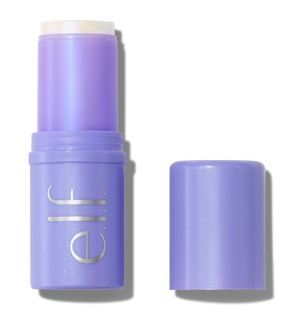
Shimmer Glimmer Glitter Hair Stick
Ingredients overview
Highlights
Key Ingredients
Other Ingredients
Skim through
e.l.f. Shimmer Glimmer Glitter Hair StickIngredients explained
Good old water, aka H2O. The most common skincare ingredient of all. You can usually find it right in the very first spot of the ingredient list, meaning it’s the biggest thing out of all the stuff that makes up the product.
It’s mainly a solvent for ingredients that do not like to dissolve in oils but rather in water.
Once inside the skin, it hydrates, but not from the outside - putting pure water on the skin (hello long baths!) is drying.
One more thing: the water used in cosmetics is purified and deionized (it means that almost all of the mineral ions inside it is removed). Like this, the products can stay more stable over time.
 We don't have description for this ingredient yet.
- A natural moisturizer that’s also in our skin
- A super common, safe, effective and cheap molecule used for more than 50 years
- Not only a simple moisturizer but knows much more: keeps the skin lipids between our skin cells in a healthy (liquid crystal) state, protects against irritation, helps to restore barrier
- Effective from as low as 3% with even more benefits for dry skin at higher concentrations up to 20-40%
- High-glycerin moisturizers are awesome for treating severely dry skin
A white powdery thing that's the major component of glass and sand. In cosmetics, it’s often in products that are supposed to keep your skin matte as it has great oil-absorbing abilities. It’s also used as a helper ingredient to thicken up products or suspend insoluble particles.
It is a type of algae extract coming from the algae commonly called Irish moss or red seaweed. It is rich in carrageenan, a natural polymer (big molecules from repeated subunits) that acts as a gelling, thickening and stabilizing agent.
There is not much info out there about this ingredient but the little we can know is the following: it comes from the fermentation of saccharomyces, that is a type of yeast and according to the manufacturer it's a natural deodorant. It contains a number of enzymes, which bio-converts several malodorous substances, so most often you will spot this ingredient in natural, aluminum- free deodorants.
We don't have description for this ingredient yet.
A really multi-functional helper ingredient that can do several things in a skincare product: it can bring a soft and pleasant feel to the formula, it can act as a humectant and emollient, it can be a solvent for some other ingredients (for example it can help to stabilize perfumes in watery products) and it can also help to disperse pigments more evenly in makeup products. And that is still not all: it can also boost the antimicrobial activity of preservatives.
A handy multifunctional ingredient that works as a preservative booster, as well as an antioxidant and soothing agent.
An easy-to-formulate, commonly used, nice to have ingredient that’s also called pro-vitamin B5. As you might guess from the “pro” part, it’s a precursor to vitamin B5 (whose fancy name is pantothenic acid).
Its main job in skincare products is to moisturise the skin. It’s a humectant meaning that it can help the skin to attract water and then hold onto it. There is also research showing that panthenol can help our skin to produce more lovely lipids that are important for a strong and healthy skin barrier.
Another great thing about panthenol is that it has anti-inflammatory and skin protecting abilities. A study shows that it can reduce the irritation caused by less-nice other ingredients (e.g. fragrance, preservatives or chemical sunscreens) in the product.
Research also shows that it might be useful for wound healing as it promotes fibroblast (nice type of cells in our skin that produce skin-firming collagen) proliferation.
If that wasn’t enough panthenol is also useful in nail and hair care products. A study shows that a nail treatment liquide with 2% panthenol could effectively get into the nail and significantly increase the hydration of it.
As for the hair the hydration effect is also true there. Panthenol might make your hair softer, more elastic and helps to comb your hair more easily.
We don't have description for this ingredient yet.
A 100% natural and plant-derived moisturizer that mimics the natural carbohydrate fraction found in the upper layer of the skin. Its special magic power is to bind to the skin stronger and longer than other moisturizer ingredients do so it can keep the skin hydrated longer than usual.
Far from the tin cans you find in the supermarket, Tin Oxide is mostly used when dealing with so-called effect pigments, tricky composite pigments that can do color travel (change color depending on the viewing angle) or give multiple color effect.
It's often found alongside Mica (as a base material) and Titanium Dioxide (as a coating) to give a glossy, pearlescent effect. Together, they make up a trademarked technology called RonaFlair Blanace from the German manufacturer Merck. According to their info, this combination can balance out undesirable tones in the skin, making it a popular choice for brightening products and highlighters.
Other than that, CosIng (the official EU INCI database) lists its uses as being a bulking agent (to increase the volume of products), as well as a physical exfoliant or an opacifying agent, but being part of composite effect pigments is a much more common use case.
A polysaccharide (a big sugar molecule) coming from the edible fruit bodies of the Silver Ear mushroom in China. Legend has it, imperial Concubine Yang Kuei-fei - the most beautiful woman in Chinese history - used it for her facial care.
So Tremella Extract is a big molecule (more than 1M Da molecular weight) with sugar constituents of Mannose, Xylose, and Glucuronic acid (20%). The last one is the most important one, as Glucuronic acid is also a major component in hyaluronic acid (HA). Thanks to this, Tremella is claimed to be an awesome moisturizer with slightly greater water-holding capacities than HA itself. This is quite a big deal as HA is known for its crazy water-holding capacity (up to 1000 times its own weight).
Not only that but Tremella also seems to have some antioxidant effect, it's not sticky (humectants do tend to be sticky) and it leaves skin moist and smooth. No wonder, Concubine Yang Kuei-fei liked this mushroom.
It's the chemically chopped up version of normal lecithin. Most often it's used to create liposomes and to coat and stabilize other ingredients.
We don't have description for this ingredient yet.
Citric acid comes from citrus fruits and is an AHA. If these magic three letters don’t tell you anything, click here and read our detailed description on glycolic acid, the most famous AHA.
So citric acid is an exfoliant, that can - just like other AHAs - gently lift off the dead skin cells of your skin and make it more smooth and fresh.
There is also some research showing that citric acid with regular use (think three months and 20% concentration) can help sun-damaged skin, increase skin thickness and some nice hydrating things called glycosaminoglycans in the skin.
But according to a comparative study done in 1995, citric acid has less skin improving magic properties than glycolic or lactic acid. Probably that’s why citric acid is usually not used as an exfoliant but more as a helper ingredient in small amounts to adjust the pH of a formulation.
A little helper ingredient that is used to adjust the pH of the product. It also helps to keep products stay nice longer by neutralizing the metal ions in the formula (they usually come from water).
One of the many types of ceramides that can be found naturally in the upper layer of the skin. Ceramides make up about 50% of the goopy stuff that's between our skin cells and play a super important role in having a healthy skin barrier and keeping the skin hydrated. It works even better when combined with its pal, Ceramide 1.
We wrote way more about ceramides at ceramide 1, so click here to know more.
One of the 9 types of ceramides that can be found naturally in the upper layer of the skin. Ceramides make up a big part (about 50%) of the goopy stuff that's between our skin cells (called extracellular matrix) and play a super important role in having a healthy skin barrier and keeping the skin hydrated.
We wrote way more about ceramides at ceramide 1, so click here to know more.
A type of ceramide that can be found naturally in the upper layer of the skin. Ceramides make up 50% of the goopy stuff that's between our skin cells and play a super important role in having a healthy skin barrier and keeping the skin hydrated.
We have written way more about ceramides at ceramide 1, so click here to know more.
Ci 77891 is the color code of titanium dioxide. It's a white pigment with great color consistency and dispersibility.
You may also want to take a look at...
| what‑it‑does | solvent |
| what‑it‑does | skin-identical ingredient | moisturizer/humectant |
| irritancy, com. | 0, 0 |
| what‑it‑does | viscosity controlling |
| what‑it‑does | viscosity controlling |
| what‑it‑does | viscosity controlling |
| what‑it‑does | solvent |
| what‑it‑does | antioxidant | preservative |
| what‑it‑does | soothing | moisturizer/humectant |
| irritancy, com. | 0, 0 |
| what‑it‑does | viscosity controlling |
| what‑it‑does | moisturizer/humectant |
| what‑it‑does | colorant | abrasive/scrub | viscosity controlling |
| what‑it‑does | antioxidant | moisturizer/humectant |
| what‑it‑does | emollient | emulsifying |
| what‑it‑does | buffering |
| what‑it‑does | chelating | buffering |
| what‑it‑does | skin-identical ingredient |
| what‑it‑does | skin-identical ingredient |
| what‑it‑does | skin-identical ingredient |
| what‑it‑does | colorant |
| irritancy, com. | 0, 0 |