




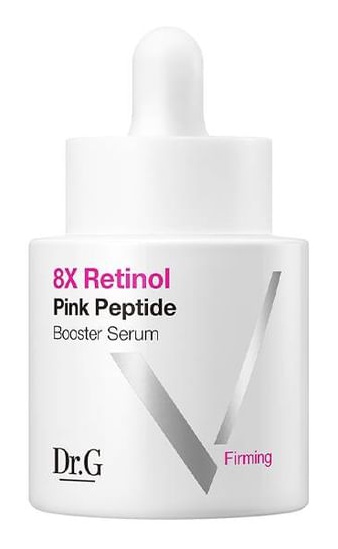
8X Retinol Pink Peptide Booster Serum
Ingredients overview
Highlights
Key Ingredients
Other Ingredients
Skim through
Dr. G 8X Retinol Pink Peptide Booster SerumIngredients explained
Good old water, aka H2O. The most common skincare ingredient of all. You can usually find it right in the very first spot of the ingredient list, meaning it’s the biggest thing out of all the stuff that makes up the product.
It’s mainly a solvent for ingredients that do not like to dissolve in oils but rather in water.
Once inside the skin, it hydrates, but not from the outside - putting pure water on the skin (hello long baths!) is drying.
One more thing: the water used in cosmetics is purified and deionized (it means that almost all of the mineral ions inside it is removed). Like this, the products can stay more stable over time.
Butylene glycol, or let’s just call it BG, is a multi-tasking colorless, syrupy liquid. It’s a great pick for creating a nice feeling product.
BG’s main job is usually to be a solvent for the other ingredients. Other tasks include helping the product to absorb faster and deeper into the skin (penetration enhancer), making the product spread nicely over the skin (slip agent), and attracting water (humectant) into the skin.
It’s an ingredient whose safety hasn’t been questioned so far by anyone (at least not that we know about). BG is approved by Ecocert and is also used enthusiastically in natural products. BTW, it’s also a food additive.
- A natural moisturizer that’s also in our skin
- A super common, safe, effective and cheap molecule used for more than 50 years
- Not only a simple moisturizer but knows much more: keeps the skin lipids between our skin cells in a healthy (liquid crystal) state, protects against irritation, helps to restore barrier
- Effective from as low as 3% with even more benefits for dry skin at higher concentrations up to 20-40%
- High-glycerin moisturizers are awesome for treating severely dry skin
A really multi-functional helper ingredient that can do several things in a skincare product: it can bring a soft and pleasant feel to the formula, it can act as a humectant and emollient, it can be a solvent for some other ingredients (for example it can help to stabilize perfumes in watery products) and it can also help to disperse pigments more evenly in makeup products. And that is still not all: it can also boost the antimicrobial activity of preservatives.
A sugar beet-derived amino acid derivative with nice skin protection and moisturization properties. Betaine's special thing is being an osmolyte, a molecule that helps to control cell-water balance. It is also a natural osmoprotectant, meaning that it attracts water away from the protein surface and thus protects them from denaturation and increases their thermodynamic stability.
It also gives sensorial benefits to the formula and when used in cleansers, it helps to make them milder and gentler.
- A multi-functional skincare superstar with several proven benefits for the skin
- Great anti-aging, wrinkle smoothing ingredient used at 4-5% concentration
- Fades brown spots alone or in combination with amino sugar, acetyl glucosamine
- Increases ceramide synthesis that results in a stronger, healthier skin barrier and better skin hydration
- Can help to improve several skin conditions including acne, rosacea, and atopic dermatitis
It seems to us that squalane is in fashion and there is a reason for it. Chemically speaking, it is a saturated (no double bonds) hydrocarbon (a molecule consisting only of carbon and hydrogen), meaning that it's a nice and stable oily liquid with a long shelf life.
It occurs naturally in certain fish and plant oils (e.g. olive), and in the sebum (the oily stuff our skin produces) of the human skin. As f.c. puts it in his awesome blog post, squalane's main things are "emolliency, surface occlusion, and TEWL prevention all with extreme cosmetic elegance". In other words, it's a superb moisturizer that makes your skin nice and smooth, without being heavy or greasy.
Another advantage of squalane is that it is pretty much compatible with all skin types and skin conditions. It is excellent for acne-prone skin and safe to use even if you have fungi-related skin issues, like seborrhea or fungal acne.
The unsaturated (with double bonds) and hence less stable version of Squalane is Squalene, you can read about it here >>
The extract of red seaweed that has nice film-forming, skin smoothing and moisturizing properties.
The manufacturer claims that thanks to biomimetic properties between skin proteins and carrageenans it has a very long-lasting action and can form a "second skin". It also gives a "slow-release" effect to oil-loving active ingredients and measurably reduces trans-epidermal water loss (that's pretty much a synonym of saying that it moisturizes the skin).
Also known as Sugarcane, Saccharum Officinarum is a handy moisturizing ingredient mostly used as a humectant. This means that it can help the skin to attract water and then to hold onto it.
It bears a close relationship to AHA superstar, Glycolic Acid that can be derived from it, so it's often claimed that Sugarcane Extract itself also exfoliates and brightens the skin. We could not find any research studies to back this up, but Saccharum Officinarum very often comes to the formula combined with other acid containing plant extracts trade named ACB Fruit Mix. According to manufacturer data, 5% of the fruit mix increases cellular renewal by 24%, while 4% pure Glycolic did the same by 33%. So maybe, a tiny bit of exfoliation, but if you want proven efficacy, stick to pure acids.
The golden yellow oil coming from the Macadamia nut, a native Australian nut. Similar to other plant oils, it's loaded with emollient and nourishing fatty acids. It's a high oleic acid oil (50-67% oleic acid and only 0-5% linoleic acid) that makes it very emollient and ideal for dry skin types.
Its unique property is that it contains high amounts of a rare fatty acid called palmitoleic acid (12-25%) that give Macadamia oil a "cushiony" feel. It's also easily absorbed and makes the skin soft and supple.
The emollient plant oil coming from the seeds of the white flowering plant called meadowfoam. Meadowfoam Oil has a unique fatty acid composition with 95% of it being long chain fatty acids (eicosenoic acid C20:1 - 61%, docosenoic acid C22:1 - 16% and docosadienoic acid C22:2 - 18%) that make the oil extraordinarily stable. It also contains antioxidant components such as vitamin E as well as phytosterols.
Apart from Meadowfoam Oil's crazy stability, the oil is described as non-greasy, rapidly absorbed and having a similar skin feel to more often used jojoba oil. The oil is ideal for products where a soft, smooth, silky feel is required whether it be on skin or hair.
Unless you live under a rock you must have heard about shea butter. It's probably the most hyped up natural butter in skincare today. It comes from the seeds of African Shea or Karite Trees and used as a magic moisturizer and emollient.
But it's not only a simple emollient, it regenerates and soothes the skin, protects it from external factors (such as UV rays or wind) and is also rich in antioxidants (among others vitamin A, E, F, quercetin and epigallocatechin gallate). If you are looking for rich emollient benefits + more, shea is hard to beat.
 We don't have description for this ingredient yet.
If you are reading here, we are pretty sure the words retinoids and retinol ring a bell, but if not, you are seriously missing out, please click here immediately to catch up. The TL;DR version is that retinoids are the royal family of skincare with tretinoin being the king, the only FDA-approved ingredient to treat the signs of photoaging. Retinol is like a grandkid, it has to be converted (through two steps) in the skin to become retinoic acid. The conversion means retinol is both less effective and less harsh on the skin.
So where does our current molecule, Retinal, aka Retinaldehyde fit into the family (btw, here is a nice visual family tree about who is who)? Remember that retinol needed two conversion steps to become retinoic acid? Yes, you are right, Retinal is the intermediate step between retinoic acid and retinol, meaning it needs only one conversion step to become active in the skin. If we go with our royal family analogy, Retinal is Prince William, directly next in line to the throne.
Once retinal is converted, it becomes retinoic acid and does the same things we detailed in our tretinoin description. In a nutshell, it is everything you expect from an anti-aging superstar such as decreased wrinkles, smoother, firmer and more elastic skin.
This sounds good, but how does Retinal compare to retinoic acid? Good question! We found a study (a pretty good one with 125 patients) that compared 0.05% retinal with 0.05% retinoic acid (and vehicle). They concluded that "at week 18, a significant reduction of the wrinkle and roughness features was observed with both retinaldehyde and retinoic acid." and the difference between the two was not statistically significant. (Interestingly, in both groups, the results were less significant at week 44, so it might be a good idea to have a retinoid break from time to time?) Also, our guy, Retinal was much better tolerated than retinoic acid known for its harshness.
The good tolerability of retinal was also confirmed by another study that compared retinol (ROL), retinal (RAL) and retinoic acid (RA). They found that "the natural retinoids ROL and RAL do have a good tolerance profile, in contrast with the irritating potential of RA", meaning retinal is an awesome alternative if you have irritation and flaking issues with prescription products, such as Retin-A.
Last, but not least, we want to mention a pretty big (but subjectively evaluated), Avene (the French pharmacy brand famous for its Retinal products) sponsored study that examined the tolerability and efficacy of a 0.1 Retinal + 6% glycolic acid product in the treatment of acne. The product was added next to the standard anti-acne regimen of 1,709 patients for 90 days and the study concluded that the formula was both very well tolerated as well as effective next to other standard anti-acne medications such as benzoyl peroxide and antibiotics.
Overall, if you are into retinoids, Retinal is a really awesome and well-proven member of the family that is absolutely worth trying.
An easy-to-formulate, commonly used, nice to have ingredient that’s also called pro-vitamin B5. As you might guess from the “pro” part, it’s a precursor to vitamin B5 (whose fancy name is pantothenic acid).
Its main job in skincare products is to moisturise the skin. It’s a humectant meaning that it can help the skin to attract water and then hold onto it. There is also research showing that panthenol can help our skin to produce more lovely lipids that are important for a strong and healthy skin barrier.
Another great thing about panthenol is that it has anti-inflammatory and skin protecting abilities. A study shows that it can reduce the irritation caused by less-nice other ingredients (e.g. fragrance, preservatives or chemical sunscreens) in the product.
Research also shows that it might be useful for wound healing as it promotes fibroblast (nice type of cells in our skin that produce skin-firming collagen) proliferation.
If that wasn’t enough panthenol is also useful in nail and hair care products. A study shows that a nail treatment liquide with 2% panthenol could effectively get into the nail and significantly increase the hydration of it.
As for the hair the hydration effect is also true there. Panthenol might make your hair softer, more elastic and helps to comb your hair more easily.
This long-named, polymer molecule (big molecule from repeated subunits) is a helper ingredient that's good at emulsifying and stabilizing oils into water-based formulas. It also acts as a thickening and gelling agent that creates nice, non-sticky and supple textures. It works over a very wide pH range (3-12) and can be used to thicken up low-ph formulas, such as exfoliants. Its recommended used range is 0.3-3%.
It's the chemically chopped up version of normal lecithin. Most often it's used to create liposomes and to coat and stabilize other ingredients.
A super common emollient that makes your skin feel nice and smooth. It comes from coconut oil and glycerin, it’s light-textured, clear, odorless and non-greasy. It’s a nice ingredient that just feels good on the skin, is super well tolerated by every skin type and easy to formulate with. No wonder it’s popular.
Though its long name does not reveal it, this polymer molecule (big molecule from repeated subunits or monomers) is a relative to the super common, water-loving thickener, Carbomer. Both of them are big molecules that contain acrylic acid units, but Acrylates/C10-30 Alkyl Acrylate Crosspolymer also contains some other monomers that are hydrophobic, i.e. water-hating.
This means that our molecule is part water- and part oil-loving, so it not only works as a thickener but also as an emulsion stabilizer. It is very common in gel-type formulas that also contain an oil-phase as well as in cleansers as it also works with most cleansing agents (unlike a lot of other thickeners).
An ester that comes from Cetearyl alcohol and the fatty acids of olive oil. It often comes to the formula coupled with Sorbitan Olivate as the two together form the well-known, natural emulsifier trade named Olivem 1000.
Other than helping oil and water to blend, the main thing of Olivem 1000 is generating liquid crystal structures that are similar to the lipid structures of the stratum corneum (the outermost layer of the skin). Thanks to this, Olivem 1000 doubles as an active ingredient with significant moisturizing, barrier-repairing and soothing properties.
It also helps to deliver water-soluble actives such as caffeine more effectively, and can even boost SPF in sunscreen formulas. Its typical use level is 1-5% and has wide compatibility with other actives and oils.
Overall, a real multi-tasker with nice sensorial properties. No wonder it is so popular.
A hydrocarbon-based emollient that can come in different viscosities from silky-light through satiny-smooth to luxurious, rich. It forms a non-occlusive film on the surface of the skin and brings gloss without greasiness to the formula. It's a very pure and hypoallergenic emollient that's also ideal for baby care products.
An ester coming from sorbitol and the fatty acids of olive oil. It is part of the popular emulsifier trade named Olivem 1000 that is well-known for generating biomimetic liquid crystal structures. We have more info on Olivem 1000 at Cetearyl Olivate >>
We don't have description for this ingredient yet.
It's a little helper ingredient that helps to set the pH of the products to be right. It has an alkaline pH and can neutralize acidic ingredients.
Propanediol is a natural alternative for the often used and often bad-mouthed propylene glycol. It's produced sustainably from corn sugar and it's Ecocert approved.
It's quite a multi-tasker: can be used to improve skin moisturization, as a solvent, to boost preservative efficacy or to influence the sensory properties of the end formula.
If you have spotted ethylhexylglycerin on the ingredient list, most probably you will see there also the current IT-preservative, phenoxyethanol. They are good friends because ethylhexylglycerin can boost the effectiveness of phenoxyethanol (and other preservatives) and as an added bonus it feels nice on the skin too.
Also, it's an effective deodorant and a medium spreading emollient.
Adenosine is an important little compound in our body that has a vital cell-signalling role. Research on smearing it on our face is also promising and shows so far a couple of things:
- It can help with wound healing
- It’s a good anti-inflammatory agent
- It might even help with skin’s own collagen production and improve skin firmness and elasticity
- It helps with barrier repair and protection
- It might be even useful for the hair helping with hair thickness and hair growth
One of the many types of ceramides that can be found naturally in the upper layer of the skin. Ceramides make up about 50% of the goopy stuff that's between our skin cells and play a super important role in having a healthy skin barrier and keeping the skin hydrated. It works even better when combined with its pal, Ceramide 1.
We wrote way more about ceramides at ceramide 1, so click here to know more.
A handy helper ingredient that helps water and oil to mix nicely together, aka emulsifier. It is especially recommended for protective, baby care and general purpose emollient creams.
It also helps to disperse insoluble particles (think color pigments or zinc/titanium dioxide sunscreen) nice and even in cosmetic formulas.
A vegetable-based emulsifier that helps the oily and watery parts of the formula to mix nicely together. It is compatible with a bunch of cosmetic oils as well as active ingredients and its specialty is creating emulsions with super high heat and freeze stability (from -25 °C and +50 °C).
A glycerin-derived gentle cleansing agent that is described as being skin and eye-friendly, and not leaving the skin dry or tight. It's also used as a co-emulsifier or solubilizer that helps to blend small amounts of oily things into water-based products.
Super common soothing ingredient. It can be found naturally in the roots & leaves of the comfrey plant, but more often than not what's in the cosmetic products is produced synthetically.
It's not only soothing but it' also skin-softening and protecting and can promote wound healing.
Biosaccharide Gum-1 is a pretty interesting kind of sugar ingredient that is created from sorbitol via bacterial fermentation.
According to the manufacturer it’s a “S.M.A.R.T.” sugar: it has Soothing, Moisturizing, Anti-aging, Restructuring and Touch properties. Let’s look at them quickly one by one.
Soothing: the manufacturer tested out the soothing effect in vivo (meaning on humans that is always a good thing!) by measuring how 3% Biosaccharide Gum-1 decreased the tingling sensation caused by 10% lactic acid. The result was good: the tingling was decreased by 47%.
Moisturizing: Compared to famous hyaluronic acid, it turns out that the two are great together. HA has a quicker effect and provides more instant hydration (much more hydration was measured after 1h of application), while our nice sugar has a somewhat delayed effect demonstrating stronger hydration after 3h of application. After 8 hours both had similar moisturizing effect.
Anti-aging: According to ex-vivo tests (meaning not on humans, so do not trust it too much) Biosaccharide Gum-1 can stimulate a protein in our skin called sirtuin-1. This is supposed to help our skin cells to live longer, and function better.
Resurfacing: The sirtuin-1 stimulation also results in quicker cell renewal - something that happens anyway but slows down as we age. And the quicker cell renewal is good because it helps the regeneration of the barrier function. That is especially nice for fragile, sensitive skin.
Touch: our fermented sugar is not only good to the skin, but it also feels great on the skin. It gives a nice “soft touch” feeling and makes the products pleasant to use.
The bottom line is that the above info is from the manufacturer (and we could not find any relevant independent research) so obviously take it with a grain of salt. But Biosaccharide Gum-1 does look as an interesting and promising ingredient that’s why it earned our goodie rating.
- Primary fat-soluble antioxidant in our skin
- Significant photoprotection against UVB rays
- Vit C + Vit E work in synergy and provide great photoprotection
- Has emollient properties
- Easy to formulate, stable and relatively inexpensive
We don't have description for this ingredient yet.
We don't have description for this ingredient yet.
Beta-Glucan is a nice big molecule composed of many smaller sugar molecules (called polysaccharide). It’s in the cell walls of yeast, some mushrooms, seaweeds, and cereals.
It’s a real goodie no matter if you eat it or put it on your face. Eating it is anti-diabetic, anti-cancer, and even lowers blood cholesterol.
Putting it on your face also does a bunch of good things: it‘s shown to have intensive skin repairing & wound healing properties, it’s a mild antioxidant, a great skin soother, and moisturizer, and it even shows promising anti-aging benefits.
The manufacturer of the ingredient did a published study with 27 people and examined the effect of 0.1% beta-glucan. They found that despite the large molecular size the smaller factions of beta-glucan penetrate into the skin, even into the dermis (the middle layer of the skin where wrinkles form). After 8 weeks there was a significant reduction of wrinkle depth and height and skin roughness has also improved greatly.
Bottom line: Beta-glucan is a great ingredient, especially for sensitive or damaged skin. It soothes, moisturizes, and has some anti-aging magic properties.
- Retinol (pure Vitamin A) is probably the most proven anti-aging ingredient available OTC
- It has to be converted in the skin to retinoic acid to work its magic
- Once converted, it has the same effect as all-trans-retinoic acid, aka tretinoin
- A generally accepted ballpark number is that retinol is 10-to-20 times less potent than retinoic acid
- It makes skin less wrinkled, smoother, firmer and tighter
- It might also be helpful for acne prone skin as it normalizes keratinization and makes the pores produce less sebum
- Possible side effects and irritation are also much less than with retinoic acid
- Do not use whilst pregnant
The sodium salt form of skincare superstar, vitamin C. If you do not know what the big fuss about vitamin C is, you are missing out and you have to click here and read all the geeky details about it.
Pure vitamin C (aka ascorbic acid, AA) is great and all, but its lack of stability is a big challenge for the cosmetics industry. One solution is to create stable derivatives that can be absorbed into the skin, convert there to AA and do all the magic AA is proven to do (which is being an antioxidant, a collagen booster, and a skin brightener).
SAP (the vit C derivative, not the enterprise software, obvs) is a promising derivative that has great stability up to pH 7. The challenge with it though is skin penetration. Unfortunately, it seems to be limited, or to quote a great article from the Journal of Cosmetic Dermatology "topically applied ascorbyl phosphate salts are, at very best, poorly absorbed in comparison with AA". Regarding conversion to AA, there seems to be no data about it, so we can neither deny nor confirm it.
We have better news regarding the three magic abilities of vitamin C: there is in-vivo (tested on real people) data showing that SAP does have photo-protective (aka antioxidant) properties, though less than pure AA. SAP might also aid collagen boosting; in-vitro (made in the lab) data shows that it works, but is less effective than another vitamin C derivative, called MAP (that seems to be as effective as pure AA). As for skin-brightening, there is a trade publication with in-vivo data showing that SAP can fade brown spots.
Another thing SAP might be able to do is to help with acne. A 2005 study showed in vitro (in test tubes) that 1% SAP has a strong antimicrobial activity on evil acne causing P. acnes and it also showed in vivo (on real people) that 5% SAP can strongly improve the inflammatory and non-inflammatory lesions of acne vulgaris. In fact, the results were comparable or even slightly better than with 5% benzoyl peroxide.
And there is even more regarding SAP and acne. A nice double-blind study from 2009 showed that 5% SAP reduced the inflammatory lesions by 20.14% and 48.82% within 4 and 8 weeks respectively and when combined with 0.2% retinol the results were even better. With this combination treatment, the improvement was 29.28% after 4 weeks and 63.10% after 8 weeks of application.
Aside from research studies, anecdotal evidence also supports SAP being a promising vitamin C derivative. One of the best-selling (vitamin C) serums in Sephora is the Ole Henriksen Truth Serum, while on Amazon it's the OzNaturals Vitamin C 20 Serum. Another popular choice is the Mad Hippie Vitamin C serum, and all of these contain vitamin C in the form of SAP.
Overall, we think SAP is a goody! In terms of anti-aging, it's probably not as effective as pure Ascorbic Acid, but it's totally worth a try. However, if your skin is acne-prone, SAP is your form of Vitamin C and it's a must-try.
We don't have description for this ingredient yet.
We don't have description for this ingredient yet.
Thanks to Nivea, Q10 is a pretty well-known ingredient and the fame and Beiersdorf's (the parent company of Nivea) obsession with it are not for no reason. It's an antioxidant found naturally in human cells where it plays a big role in energy production.
In fact, it's so important for energy production that if taken as an oral supplement it has a caffeine-like effect and if taken at night you will probably not sleep very well (so you should take it in the morning). Q10 supplementation is not a bad idea: it not only gives you energy but research also shows that oral Q10 increases the Q10 level of the skin (of course, it decreases with age like pretty much every good thing in the skin) and may help to reduce wrinkles. If you are not for supplements, dietary sources include fish, spinach, and nuts.
As for skincare, Q10 comes in the form of a yellow, oil-soluble powder that's shown to absorb into the upper layer of the skin and act there like an awesome antioxidant. It not only has preventative effects but might also be able to reduce the depth of wrinkles, though 0.3% Q10 was used in the study that counts as really high (products containing that much should be very yellow!).
It's one of the important lipids that can be found naturally in the outer layer of the skin. About 25% of the goopy stuff between our skin cells consists of cholesterol. Together with ceramides and fatty acids, they play a vital role in having a healthy skin barrier and keeping the skin hydrated.
Apart from being an important skin-identical ingredient, it's also an emollient and stabilizer.
We don't have description for this ingredient yet.
It’s the most commonly used version of pure vitamin E in cosmetics. You can read all about the pure form here. This one is the so-called esterified version.
According to famous dermatologist, Leslie Baumann while tocopheryl acetate is more stable and has a longer shelf life, it’s also more poorly absorbed by the skin and may not have the same awesome photoprotective effects as pure Vit E.
We don't have description for this ingredient yet.
Pentaerythrityl Tetra-Di-T-Butyl Hydroxyhydrocinnamate is an antioxidant molecule used in small amounts (less than 0.8%) to help products stay nice longer. More specifically, it is great at preventing discoloration or other types of oxidative degradation. It is a trendy alternative to often bad-mouthed synthetic antioxidant and stabilizer, BHT.
A white to beige powder that is described as the golden standard emulsifier for emulsions (oil+water mixtures) that are difficult to stabilize. It is especially popular in sunscreens as it can boost SPF protection and increase the water-resistance of the formula.
A handy helper ingredient that has photostabilizer properties. It is useful both for color-protecting products so that they do not change color for a long time as well as for stabilizing unstable sunscreen agents, such as famous UVA filter avobenzone.
DESM can also increase critical wavelength (the higher value means more UVA protection) in sunscreens and it can boost SPF by about 5 units in high-SPF products.
At first glance, you could think that Bakuchiol is your average plant extract. It is derived from the seeds of Psoralea Corylifolia, aka Babchi, a plant important in Indian and Chinese medicine. The molecule was first isolated in 1973 and several anti-something properties are known about it: it has anti-inflammatory, antioxidant, anti-tumor, anti-bacterial and hepatoprotective magical abilities like plenty of other Ayurvedic plant extracts.
What makes Bakuchiol a special snowflake is the recent discovery that it behaves on the skin in a way very similar to well-known skincare superstar, retinol. While chemically, it has nothing to do with the vitamin-A family, aka retinoids, comparative gene expression profiling (a fancy way of saying that they compared how retinol and bakuchiol modify the way skin cells behave and produce important skin proteins such as collagen) shows that retinol and bakuchiol regulate skin cell behavior in a similar way.
To be more specific, both Bakuchiol and retinol upregulate collagen I, III and IV production and downregulate MMP, the evil collagen attacking enzyme in our skin. This means more collagen stays in our skin and we all know that more collagen equals firmer, more wrinkle-free skin. A 12-week clinical study using a 0.5% Bakuchiol formula with 17 people using it twice a day confirmed a significant improvement in lines and wrinkles, elasticity, firmness and an overall reduction in photo-damage. Also, the test formula was very well tolerated, without any retinol-like side effects.
What's more, a 2018 double-blind study with 44 people compared 0.5% Bakuchiol with 0.5% retinol cream and found that "bakuchiol is comparable to retinol in its ability to improve photoaging and is better tolerated than retinol". A super promising result after 12 weeks.
If you are not a daredevil-type who doesn't want to stop using a super well-proven retinol for a newbie like Bakuchiol, we have good news. The two also work very nicely together and Bakuchiol can actually help to stabilize the otherwise unstable and hard to formulate retinol.
And we are still not done, as Bakuchiol shows not only anti-aging properties but also nice anti-acne effects. 1% Bakuchiol seems to be very effective in itself (57% reduction in acne after 6 weeks treatment) and even better when combined with 2% salicylic acid (67% reduction in acne after 6 weeks). We like that Bakuchiol is such a good team player! The molecule works against acne in multiple ways: It downregulates 5α-reductase (a sebum-controlling enzyme), it is antibacterial (including P. acnes), anti-inflammatory and it inhibits lipid-peroxidation, an evil oxidative process that is recently thought to be a very early trigger in the acne process.
We feel that this description is becoming very long so we will just mention that Bakuchiol also seems to positively regulate hydration-related genes such as Aquaporin 3 and also shows some melanin-inhibiting properties.
Overall, we think Bakuchiol is an awesome molecule with lots of promise both for anti-aging and anti-acne. But the proof compared to the well-established superstars is far from solid, so in a skincare routine, we would rather add Bakuchiol next to retinol than straight up replace it. Unless you are a gimme-the-newest-shiny-thing-under-the-sun-type.
A white, waxy emollient that gives "body" to skincare formulas. Comes from coconut or palm kernel oil.
It's an ester form of vitamin A (retinol + palmitic acid) that belongs to the "retinoid family". The retinoid family is pretty much the royal family of skincare, with the king being the FDA-approved anti-aging ingredient tretinoin. Retinol is also a very famous member of the family, but it's like Prince George, two steps away from the throne. Retinyl palmitate will be then Prince Charlotte (George's little sister), quite far (3 steps) away from the throne.
By steps, we mean metabolic steps. Tretinoin, aka retinoic acid, is the active ingredient our skin cells can understand and retinyl palmitate (RP) has to be converted by our metabolic machinery to actually do something. The conversion is a 3 step one and looks like this:
retinyl palmitate --> retinol -- > retinaldehyde --> all-trans-retinoic acid
As we wrote in our lengthy retinol description the problem is that the conversion is not terribly effective. The evidence that RP is still an effective anti-aging ingredient is not very strong, in fact, it's weak. Dr. Leslie Baumann in her fantastic Cosmetic Dermatology book writes that RP is topically ineffective.
What's more, the anti-aging effectiveness is not the only questionable thing about RP. It also exibits questionable behaviour in the presence of UV light and was the center of a debate between the non-profit group, EWG (whose intentions are no doubt good, but its credibility is often questioned by scientists) and a group of scientists and dermatologists lead by Steven Q. Wang, MD, director of dermatologic surgery at Memorial-Sloan Kettering Cancer Centre.
Dr. Leslie Baumann wrote a great review of the debate and summarized the research available about retinyl palmitate here. It seems that there is a study showing RP being photo protective against UVB rays but there is also a study showing RP causing DNA damage and cytotoxicity in association with UVA.
We think that the truth lies somewhere in the middle, and we agree with Dr. Baumann's conclusion: "sufficient evidence to establish a causal link between RP and skin cancer has not been produced. Nor, I’m afraid, are there any good reasons to recommend the use of RP". We would add especially during the day!
Bottom line: If you wanna get serious about retinoids, RP is not your ingredient (retinol or tretinoin is!). However, if you use a product that you like and it also contains RP, there is no reason to throw it away. If possible use it at night, just to be on the safe side.
A little helper ingredient that can boost the performance and enhance the delivery of active ingredients in a formula. It can penetrate deep layers of the skin helping actives to do the same.
It's especially useful to help active ingredients for self-tanning (DHA), anti-acne or skin-whitening to penetrate deeper and work better.
We don't have description for this ingredient yet.
The famous omega-6 fatty acid, the mother of all ω-6 fatty acids in our body. It is a so-called polyunsaturated fatty acid meaning it has more than one (in this case two) double bonds and a somewhat kinky structure that makes LA and LA-rich oils a thin liquid.
It is also an essential fatty acid meaning our body cannot synthesize it and has to take it from food. This is not hard at all as plenty of nuts (such as flax, poppy or sesame seeds) and vegetable oils (such as sunflower or safflower) are rich in LA. The hard thing seems to be eating enough omega-3-s, more specifically eating a healthy ratio of omega-6 to omega-3, but that is a topic for a what-is-good-to-eat-site and not for us.
As for linoleic acid and the skin, LA is a really important little guy found naturally in our skin. It is the most abundant fatty acid in the epidermis and it serves as a structural precursor for important skin lipids called ceramides. Knowing this, it will not come as a surprise that Linoleic acid has a central role in the structure and function of stratum corneum permeability, aka healthy skin barrier. LA deficiency leads to an impaired more permeable skin barrier and the topical application of LA-rich sunflower oil can fix this issue rapidly (while oleic-rich olive oil did not have the same barrier repairing effect).
LA is not only important for dry, barrier damaged skin types but also for acne-prone skin. Research shows that problem skin has lower levels of linoleic acid (and higher levels of oleic acid) than normal skin. So LA-deficiency in the skin seems to be connected not only to an impaired skin barrier but also to acne and smearing LA all over your face might help with your problem skin. A double-blind study using a 2.5% LA gel for 4 weeks found a 25% reduction in the size of microcomedones, the tiny blocked pores that can later lead to acne.
If that was not enough, we have one more thing to report about LA. It lightens hyperpigmentation (aka UVB caused sun spots) both by blocking the melanin production of melanocytes (the skin cells that make the pigment melanin) and by enhancing the desquamation of melanin pigment from the upper layers of the skin.
Overall, linoleic acid is a multi-functional skin goodie with barrier repairing, acne-reducing, and skin-lightening magic abilities. It's a nice one to spot on the ingredient list pretty much for any skin type.
A very common ingredient that can be found in all cell membranes. In cosmetics it's quite the multi-tasker: it's an emollient and water-binding ingredient but it's also an emulsifier and can be used for stabilization purposes. It's also often used to create liposomes.
We don't have description for this ingredient yet.
We don't have description for this ingredient yet.
We don't have description for this ingredient yet.
Hydroxypinacolone Retinoate (HPR) is the newest member of the "royal family of skincare" (see who is who on this cool retinoids family tree), the retinoid family. The queen of the family is the FDA-approved anti-aging superstar, retinoic acid, aka tretinoin and HPR seems to be a gentle but influential sister princess to the queen.
Good to know: the trade name of HPR is Granactive Retinoid. The manufacturer produces it as 10% active and 90% solvent called dimethyl isosorbide. When a product claims 2% Granactive Retinoid, it means 0.2% Hydroxypinacolone Retinoate (and 1.8% dimethyl isosorbide) on the ingredient list.
It's a so-called retinoic acid ester, meaning that it's directly related to retinoic acid. If you've already read our description about retinol or retinyl palmitate, you know that the active ingredient our skin cells can interpret is retinoic acid. Other forms of retinoids have to be converted by our metabolic machinery to do something. That's not the case with HPR. It binds directly to the retinoid receptors of the skin cells to work its skincare magic.
The big promise of HPR is that it's similarly active as retinoic acid (no conversion needed, remember) but without the irritation. According to the manufacturer's tests, 24 hours of an occlusive patch with 0.5% HPR resulted in significantly lower irritation than 0.5% retinol. Also, there was a "dramatic reduction of lines and wrinkles" after applying 0.2% HPR around the eyes twice a day for 14 days.
These results sound sooo promising that we don't blame you if you wanna run out right now and get an HPR formula to slather on your face. But, before you do, you have to know that the info we have about HPR at the moment is mainly from the manufacturer, whose tests may or may not be accurate or properly designed (such as controlled, double-blind and conducted on an appropriate number of people).
As HPR is pretty new there isn't that much independent research we could find yet. We found two Italian studies both examining the efficacy of HPR combined with other things (retinol in both cases, and papain in one of them) for the treatment of acne. Both studies found the formulas effective but they contained other things too, so it's hard to judge how well HPR did.
Regarding anti-aging, there is a pretty recent, Estee Lauder sponsored study that compared the in-vitro (not on real human beings but on skin models) collagen-boosting effectiveness of Hydroxypinacolone Retinoate, tretinoin, good old retinol and retinyl palmitate (RP). The results are pretty encouraging showing that "HPR had greater levels of gene transcription than retinol and RP (RP) at the same concentrations ... however, HPR did not achieve gene transcription levels of ATRA (tretinoin)." But, a much higher dose might be tolerated from HPR and the highest dose of HPR out-performed tretinoin. Pretty encouraging, though we are very much waiting for a study to confirm all this on real human beings.
Bottom line: We are really happy to see some innovation happening with retinoids, and we think Hydroxypinacolone Retinoate is a super promising rising star, but it’s not fully proven yet. If you are someone who likes to experiment and try out the newest things, grab your running shoes and try some HPR containing serum now (see product list below :)). If you like the tried and true, however, stick to retinol and tretinoin for now and re-examine the question in a couple of years when (hopefully) more research will be available.
Are you into Retinoids? Read our shiny description about other members of the retinoid family:
- Retinyl Propionate: the most promising retinol ester out there
- Retinyl Retinoate: a super interesting retinol-retinoic acid hybrid molecule
- Tretinoin: the FDA-proven, well-known active ingredient
- Retinol: the good old vitamin A molecule
- Retinyl Palmitate: a super common, but our least fav member of the retinoids
A colorless to light yellow oily fluid that works as an emollient (makes your skin nice and smooth) and a solvent for poorly soluble materials, such as sunscreen agents. It also has a light touch, low odor, and good spreadability. It is derived from the amino acid sarcosine and is biodegradable.
Retinyl Retinoate (RR) is a less well known but super interesting member of the retinoids (vitamin A derivatives), aka the "royal family of skincare". Unless you live under a skincare-news-shielding rock, you must have heard about tretinoin, the FDA-approved anti-aging superstar, and retinol, the most common OTC version of tretinoin. You can read more about whos-who in the retinoid family here.
Enter Retinyl Retinoate, a molecule that is created by attaching retinol to retinoic acid. The attachment makes the molecule more stable (pure retinol is unstable and hard to formulate) as well as more active. If you read our shiny description about retinol you will know that it is not active and has to be converted by our metabolic machinery to become retinoic acid, the biologically active molecule. The conversion is not very effective and takes two steps. Retinyl Retinoate also has to be converted, but in the first step, our cells break up the molecule to become retinoic acid (the active) and retinol, meaning that it becomes active both after the first conversion step as well as later on once retinol is further converted.
The Korean research group, who invented the molecule, did several studies published in well-respected journals to prove that Retinyl Retinoate has better anti-aging activity than retinol. In marketing materials, RR is often touted to be 8 times as active as retinol, but as far as research goes we can cite that "the biological activity of retinyl retinoate was in between the properties of retinol and retinoic acid. Retinyl retinoate showed higher biological activity than that of retinol, such as RAR activity and collagen synthesis. Also, retinyl retinoate showed a similar side-effect to that of retinol, and not retinoic acid."
As for in-vivo, aka done on real people studies, there is one from 2010 that compares 0.06% Retinyl Retinoate to placebo and to 0.075% retinol. The conclusion of this study was that 0.06% RR is "significantly" more effective than placebo or retinol, and RR also had a faster-acting effect. Another study (in test tubes + mouse skin) concluded that RR increases the Hyaluronic acid production more than other retinoids and is also less of an irritant.
RR shows promise for treating acne. In an 8 week, double-blind clinical study, 0.05% retinyl retinoate "showed a significant decrease in both inflammatory and non-inflammatory lesions, and in sebum amount". It even had some activity against P.acnes that makes it a promising ingredient for acne prone skin, especially when combined with other actives.
Overall, we find Retinyl Retinoate a very interesting and promising member of the retinoid family. It is not as proven as good old retinol (the multiple studies on RR come from the same research guys), but it promises several advantages (more stable, more active, less irritating), so we say that if you like retinoids, RR is worth trying.
Benzotriazolyl Dodecyl P-Cresol is a broadband UV absorber used to stabilize products in transparent packaging. It protects sensitive ingredients such as colors, fragrances, or natural extracts from photooxidative degradation. The recommended usage rate is 0.01% - 0.1%.
If you see a cosmetic product that claims that it has "Botox-like effect" then two things are almost certain: one, the product overpromises and two, it contains Argireline.
So this one is the famous peptide that's marketed by its manufacturer as the "Botox in a jar". The basis for this claim is that it targets the same wrinkle forming mechanism (wrinkles caused by facial muscle movement) as Botox, but the way it works is very different. In addition, the extent to which it can prevent muscles from contracting (and to smooth wrinkles) is very different (otherwise why would anyone use still Botox?).
The manufacturer did several studies to prove that Argireline really works and it does (just not as well as Botox). In-vivo (made on real people) tests showed that using 10% Argireline solution around the eyes for 15 days decreased wrinkles depth by 17%, while a 5% Argireline formula applied for 28 days did almost the same with a decrease in wrinkle depth by 16.26%. A Spanish University also did some research and found that Argireline increased the level of skin moisturization and decreased both the depth and width of wrinkles "significantly".
This means, Acetyl Hexapeptide-8 does have some ability to smooth wrinkles (but not as well as Botox - sorry, if we sound like a broken record). Also, we have to agree with TruthInAging, that it's not a collagen builder and not a preventer of structural aging (think vitamin C, AHAs or retinol); it's just a quick fix. If you are looking for one, this could be your thing. If you are more of a "let's treat this aging thing properly" type, then it's probably not your thing.
- GHK-Cu is a copper-peptide complex found naturally in yucky bodily fluids (plasma, saliva, and urine)
- It has unique wound healing properties by stimulating the breakdown of unhealthy, too large collagen in scar tissue and stimulating nice and healthy collagen production afterwards
- It stimulates the production of several important skin-identical ingredients (e.g. collagen, elastin, and glycosaminoglycans)
- It has significant anti-inflammatory and antioxidant effect
- There are a few promising studies showing GHK-Cu can improve skin elasticity, clarity, firmness and reduce lines and wrinkles
- It can improve hair growth by enlarging hair follicles (and bigger follicles produce longer, thicker hair)
- There are some urban legends about possible overdosing or facial hair problems (read more in geeky details)
A pretty famous and better-researched peptide consisting of five amino acids (the building blocks of all proteins). It was created in a joint effort by the French ingredient supplier, Sederma and the cosmetics industry big shot, Procter&Gamble.
The amino acid sequence of the peptide is lysine–threonine–threonine–lysine–serine (KTTKS). Sometimes, it's also called collagen pentapeptide, as it's a subfragment of skin-structure-giving type I collagen. The KTTKS amino sequence is then attached for better oil solubility and skin penetration to palmitic acid and BOOM; we get Palmitoyl Pentapeptide-4.
Though most research is manufacturer sponsored, the clinical studies about Palmitoyl Pentapeptide-4 are promising. In short, it can reduce fine lines, wrinkles and improve skin texture significantly (and at crazy low concentrations, the studies were done with just 3 ppm that is 0.0003%).
There are also studies comparing Palmitoyl Pentapeptide-4 with anti-aging gold standard, retinol. One of them compared 3ppm Pal-KTTKS with 700 ppm (0.07%) retinol and found that they showed similar wrinkle improving ability with the peptide showing better skin tolerability.
Bottom line, if you are into peptides, this is a good one to try.
A four amino acid peptide that is claimed to improve puffy eye bags via its anti-oedema and anti-glycation effects.
To back this claim up, the manufacturer created an in-vivo study with 20 volunteers using 10% of EYESERYL (that comes down to 0.01% (!) of the pure peptide) and found that by day 15, 70% of the volunteers improved, while 95% of the volunteers improved by the end of the study (60 days). About third of them improved only slightly, third of them showed an ok improvement and third showed a good improvement. They also have pretty convincing before and after photos, so we can tell you that for the lucky ones, the improvement can be real and visible.
But, the thing is that puffiness around the eyes can have multiple reasons and one of the major ones is fat accumulation that might happen as we age. No miracle cream or ingredient can do much about that, however, another common reason is water accumulation. If the reason behind your eye bags is this latter one, trying an eye cream with Acetyl Tetrapeptide-5 can be a good idea and might bring nice improvements.
A four amino acid peptide with the amino sequence of glycine-glutamine-proline-arginine. It is attached to palmitic acid (a fatty acid) to increase oil solubility and skin penetration.
It works by reducing the production of the signal molecule, interleukin-6 (IL-6) which promotes inflammation in the skin and less inflammation means slower degradation of important things (like collagen) that results in younger looking skin for a longer time.
It works in synergy with its pal, Palmitoyl Tripeptide-1 in the famous Matrixyl 3000 complex. You can read some more about the famous duo here.
A really famous peptide that is part of Matrixyl 3000, the most sold peptide complex in the word. Before we go and find out what the big deal with Matrixyl 3000 is, let's just focus on Palmitoyl Tripeptide-1 itself for a bit.
It's a small three amino acid (they are the building blocks of all proteins) peptide with the amino sequence of glycine-histidine-lysine, or GHK. GHK is attached to palmitic acid (a fatty acid) to increase oil solubility and skin penetration.
The GHK part is the important one as it's a type I collagen fragment. When collagen naturally breaks down in the skin, the resulting peptide fragments signal to the skin that it should get to work and create some nice, new collagen. Adding in collagen fragment peptides, like GHK, might trick the skin into thinking that collagen has broken down and it's time to create some more.
Therefore, Palmitoyl Tripeptide-1 is believed to be able to stimulate collagen production in the skin, and more collagen means fewer wrinkles and younger looking skin.
In Matrixyl 3000, Palmitoyl Tripeptide-1 is coupled with Palmitoyl Tetrapeptide-7 and the duo works in synergy to reduce wrinkles and give younger looking skin. According to the manufacturer's in-vivo (made on real people) test, applying 3% Matrixyl 3000 twice a day for 2 months resulted in all of the following things:
- 39.4% reduction in surface occupied by deep wrinkles
- 32.9% reduction in main wrinkle density
- 19.9% reduction in main wrinkle average depth
- 16% improvement in roughness
- 16.2% in lifting effect
- 5.5% improvement in elasticity
- 15.5% improvement in skin tone
Manufacturer results, of course, always have to be taken with a pinch of salt, but if you like peptides, the Matryxil 3000 duo is one of the best-proven and most well-known ones and it's something that is worth trying.
It's one of the most commonly used thickeners and emulsion stabilizers. If the product is too runny, a little xanthan gum will make it more gel-like. Used alone, it can make the formula sticky and it is a good team player so it is usually combined with other thickeners and so-called rheology modifiers (helper ingredients that adjust the flow and thus the feel of the formula). The typical use level of Xantha Gum is below 1%, it is usually in the 0.1-0.5% range.
Btw, Xanthan gum is all natural, a chain of sugar molecules (polysaccharide) produced from individual sugar molecules (glucose and sucrose) via fermentation. It’s approved by Ecocert and also used in the food industry (E415).
You may also want to take a look at...
| what‑it‑does | solvent |
| what‑it‑does | moisturizer/humectant | solvent |
| irritancy, com. | 0, 1 |
| what‑it‑does | skin-identical ingredient | moisturizer/humectant |
| irritancy, com. | 0, 0 |
| what‑it‑does | solvent |
| what‑it‑does | moisturizer/humectant |
| what‑it‑does | cell-communicating ingredient | skin brightening | anti-acne | moisturizer/humectant |
| what‑it‑does | skin-identical ingredient | emollient |
| irritancy, com. | 0, 1 |
| what‑it‑does | moisturizer/humectant | viscosity controlling |
| what‑it‑does | moisturizer/humectant |
| what‑it‑does | emollient |
| what‑it‑does | emollient |
| what‑it‑does | emollient |
| what‑it‑does | emollient |
| what‑it‑does | cell-communicating ingredient |
| what‑it‑does | soothing | moisturizer/humectant |
| irritancy, com. | 0, 0 |
| what‑it‑does | viscosity controlling |
| what‑it‑does | emollient | emulsifying |
| what‑it‑does | emollient |
| what‑it‑does | viscosity controlling |
| what‑it‑does | emulsifying |
| what‑it‑does | emollient | perfuming | solvent |
| what‑it‑does | emulsifying |
| what‑it‑does | viscosity controlling |
| what‑it‑does | buffering |
| what‑it‑does | solvent | moisturizer/humectant |
| what‑it‑does | preservative |
| what‑it‑does | cell-communicating ingredient |
| what‑it‑does | skin-identical ingredient |
| what‑it‑does | emulsifying |
| irritancy, com. | 0, 1-2 |
| what‑it‑does | emulsifying |
| what‑it‑does | surfactant/cleansing | emulsifying |
| what‑it‑does | soothing |
| irritancy, com. | 0, 0 |
| what‑it‑does | soothing | moisturizer/humectant |
| what‑it‑does | antioxidant |
| irritancy, com. | 0-3, 0-3 |
| what‑it‑does | soothing | moisturizer/humectant |
| what‑it‑does | cell-communicating ingredient |
| what‑it‑does | antioxidant | anti-acne |
| what‑it‑does | emollient |
| what‑it‑does | antioxidant |
| what‑it‑does | skin-identical ingredient | emollient |
| irritancy, com. | 0, 0 |
| what‑it‑does | antioxidant |
| irritancy, com. | 0, 0 |
| what‑it‑does | viscosity controlling |
| what‑it‑does | antioxidant | preservative |
| what‑it‑does | emulsifying | surfactant/cleansing |
| what‑it‑does | cell-communicating ingredient | antioxidant | antimicrobial/antibacterial |
| what‑it‑does | emollient |
| irritancy, com. | 0, 0 |
| what‑it‑does | cell-communicating ingredient |
| irritancy, com. | 1-3, 1-3 |
| what‑it‑does | solvent | viscosity controlling |
| what‑it‑does | skin-identical ingredient | emollient | surfactant/cleansing |
| what‑it‑does | emollient | emulsifying |
| what‑it‑does | emulsifying | surfactant/cleansing |
| what‑it‑does | cell-communicating ingredient |
| what‑it‑does | emollient |
| what‑it‑does | cell-communicating ingredient |
| what‑it‑does | cell-communicating ingredient | moisturizer/humectant |
| what‑it‑does | cell-communicating ingredient | soothing | antioxidant |
| what‑it‑does | cell-communicating ingredient |
| what‑it‑does | cell-communicating ingredient | moisturizer/humectant |
| what‑it‑does | cell-communicating ingredient |
| what‑it‑does | cell-communicating ingredient |
| what‑it‑does | viscosity controlling |