




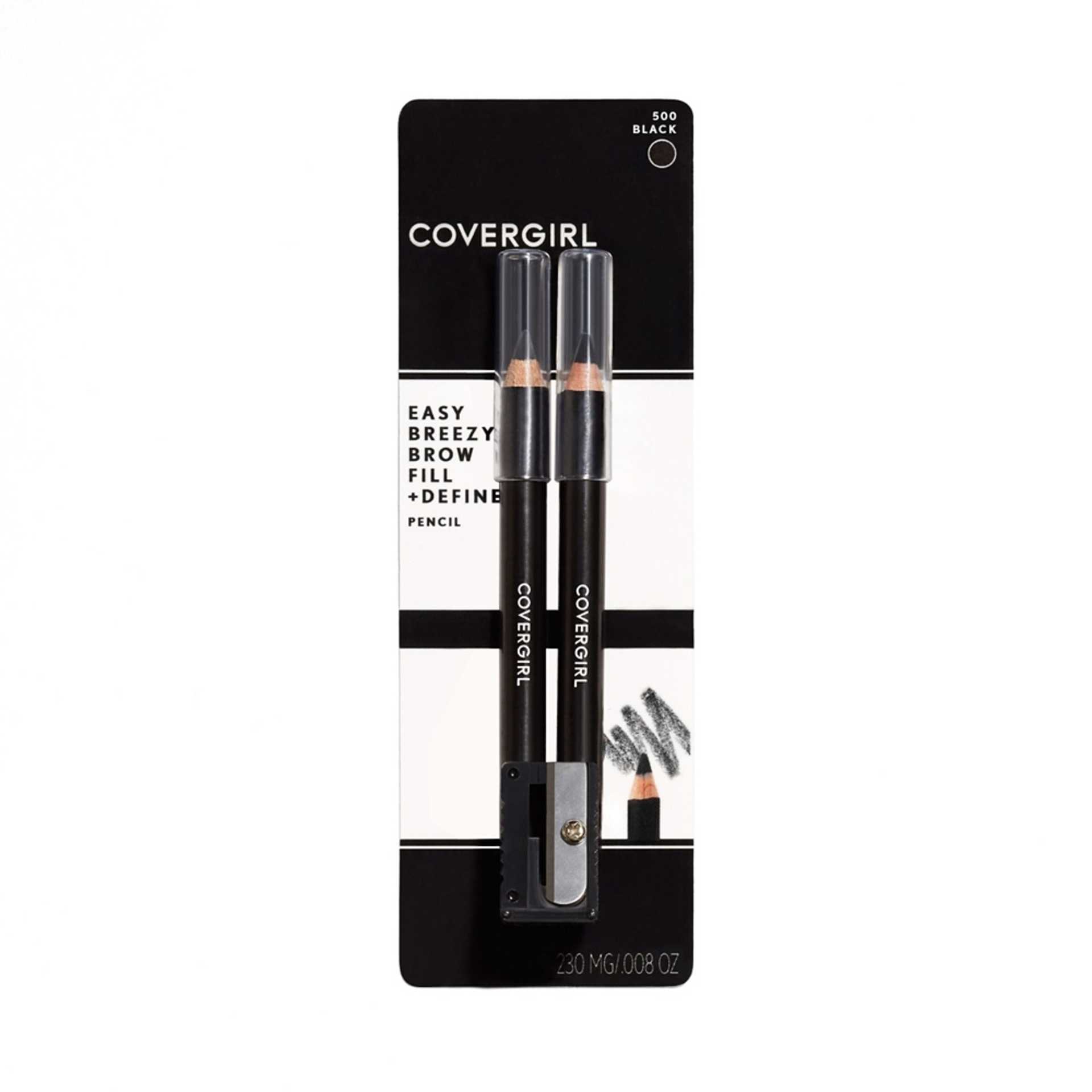
Easy Breezy Brow Fill And Define
Ingredients overview
 INCI photo pending approval
Highlights
Key Ingredients
Other Ingredients
Skim through
CoverGirl Easy Breezy Brow Fill And DefineIngredients explained
 We don't have description for this ingredient yet.
A vegetable wax coming from the leaves of the Brazilian tropical palm tree, Copernicia cerifera. Similar to other waxes, it is used to stabilize and give body to products, or to keep stick type formulas solid. It is the hardest natural wax with a high melting point (around 85C) and high gloss making it a great wax choice for lip products.
We don't have description for this ingredient yet.
A hydrocarbon wax consisting mainly of saturated straight chain hydrocarbons with C18-90+ carbon chain length. It has a high melting point (58-100 C) and it is used mainly in stick type products, such as lip balms to keep the product nice and solid.
A thick, paste-like emollient ester that is touted as a vegetable-derived lanolin alternative. It has a smooth spreadability and touch, and it gives a substantive film to protect and moisturize the skin.
A white powdery thing that's the major component of glass and sand. In cosmetics, it’s often in products that are supposed to keep your skin matte as it has great oil-absorbing abilities. It’s also used as a helper ingredient to thicken up products or suspend insoluble particles.
It’s pretty much the current IT-preservative. It’s safe and gentle, but even more importantly, it’s not a feared-by-everyone-mostly-without-scientific-reason paraben.
It’s not something new: it was introduced around 1950 and today it can be used up to 1% worldwide. It can be found in nature - in green tea - but the version used in cosmetics is synthetic.
Other than having a good safety profile and being quite gentle to the skin it has some other advantages too. It can be used in many types of formulations as it has great thermal stability (can be heated up to 85°C) and works on a wide range of pH levels (ph 3-10).
It’s often used together with ethylhexylglycerin as it nicely improves the preservative activity of phenoxyethanol.
We don't have description for this ingredient yet.
If you have spotted ethylhexylglycerin on the ingredient list, most probably you will see there also the current IT-preservative, phenoxyethanol. They are good friends because ethylhexylglycerin can boost the effectiveness of phenoxyethanol (and other preservatives) and as an added bonus it feels nice on the skin too.
Also, it's an effective deodorant and a medium spreading emollient.
The extract coming from the lovely herb, rosemary. It contains lots of chemicals, including flavonoids, phenolic acids, and diterpenes. Its main active is rosmarinic acid, a potent antioxidant, and anti-inflammatory. It has also anti-bacterial, astringent and toning properties.
The leaves contain a small amount of essential oil (1-2%) with fragrant components, so if you are allergic to fragrance, it might be better to avoid it.
A bit of a sloppy ingredient name as it covers not one but three pigments: red, yellow and black iron oxide.
The trio is invaluable for "skin-colored" makeup products (think your foundation and pressed powder) as blending these three shades carefully can produce almost any shade of natural-looking flesh tones.
Ci 77891 is the color code of titanium dioxide. It's a white pigment with great color consistency and dispersibility.
A super versatile and common mineral powder that comes in different particle sizes. It is a multi-tasker used to improve skin feel, increase product slip, give the product light-reflecting properties, enhance skin adhesion or serve as an anti-caking agent.
It is also the most commonly used "base" material for layered composite pigments such as pearl-effect pigments. In this case, mica is coated with one or more metal oxides (most commonly titanium dioxide) to achieve pearl effect via the physical phenomenon known as interference.
An inorganic (as in no carbon in its molecule) pigment that has a very intense, dark blue color. It is not permitted in lip products in the US, and only the version Ferric Ammonium Ferrocyanide is permitted in the EU.
An inorganic (as in no carbon in its molecule) pigment that can range in shade from blue (most common) to violet, pink or even green. It is not permitted in lip products in the US.
An inorganic (as in no carbon in its molecule, it is Cr2O3) pigment that gives dull olive green shades. It is not permitted in lip products in the US.
Carmine is a natural pigment that gives a bright, strawberry red shade. It counts as a special snowflake as it is the only organic pink/red colorant permitted for use around the eye area in the US.
Outside of the US though, it is not that often used, as unlike most other colorants (that tend to be synthetic or if natural, plant-derived), Carmine is animal-derived and comes from an insect called Coccus cacti. This makes it both very expensive and excludes it from animal-friendly, vegan cosmetic products.
You may also want to take a look at...
| what‑it‑does | emollient | viscosity controlling |
| what‑it‑does | emollient |
| irritancy, com. | 0, 1 |
| what‑it‑does | emollient | viscosity controlling |
| what‑it‑does | viscosity controlling |
| what‑it‑does | emollient |
| what‑it‑does | viscosity controlling |
| what‑it‑does | preservative |
| what‑it‑does | emollient | moisturizer/humectant | viscosity controlling |
| what‑it‑does | preservative |
| what‑it‑does | antioxidant | soothing | antimicrobial/antibacterial |
| what‑it‑does | colorant |
| irritancy, com. | 0, 0 |
| what‑it‑does | colorant |
| irritancy, com. | 0, 0 |
| what‑it‑does | colorant |
| what‑it‑does | colorant |
| what‑it‑does | colorant |
| irritancy, com. | 0, 0 |
| what‑it‑does | colorant |
| what‑it‑does | colorant |
| irritancy, com. | 0, 0 |